
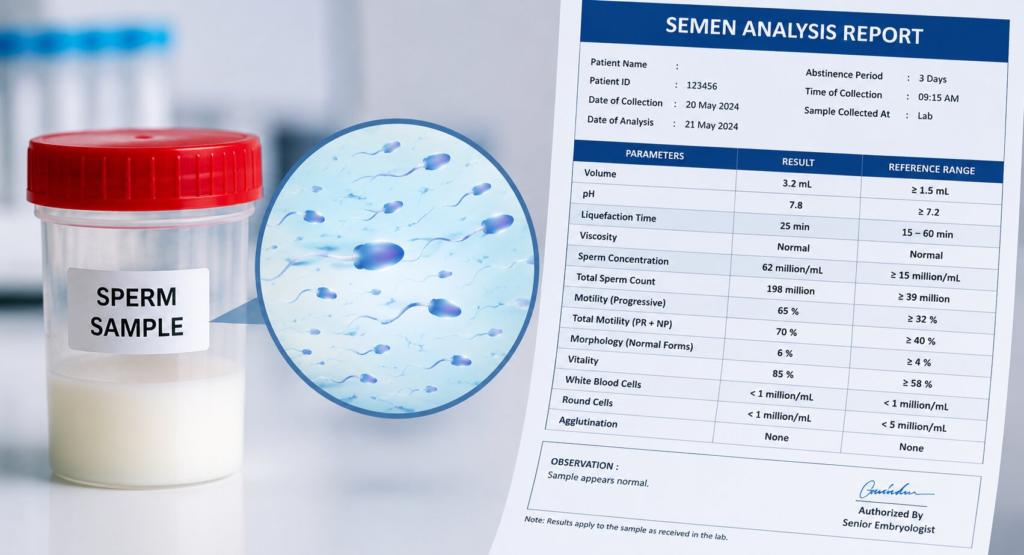
When you have a semen analysis report in your hand, and one line jumps out in red — “Pus cells: 8-10/HPF.” Your stomach drops a little. Infection? Infertility? Something worse? Honestly, this happens to more men than you’d think, and here’s the thing — that red flag doesn’t always mean look what it looks like.
Let’s clear up the confusion on the presence of pus cells in semen: what’s normal, what makes the numbers climb, and when it’s actually worth a trip to the clinic. You know what? Most of the panic around this one line could be avoided if labs simply explained it better on the report itself.
What is Pus Cells?
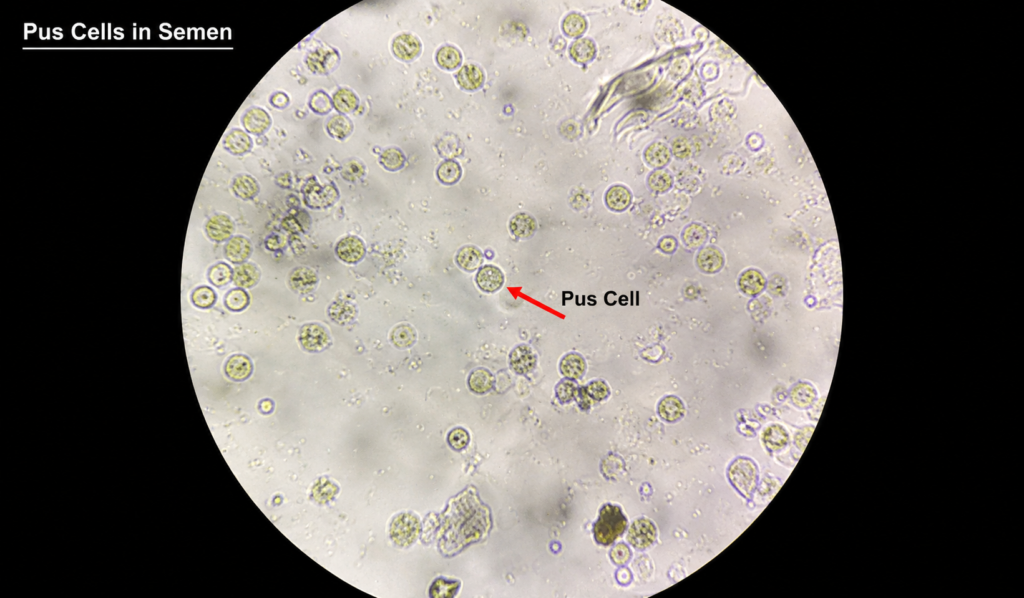
Pus cells are white blood cells — the same cells your immune system sends out whenever you feel down. Whether that’s a cut on your finger or a stubborn infection somewhere inside. In a semen report, doctors sometimes use fancier terms: pyospermia or leukocytospermia. Both mean the same basic thing — too many white blood cells hanging around in the ejaculate.
A few pus cells is totally normal. Your reproductive tract does routine cleanup work, and white blood cells are part of that maintenance crew. The concern only comes in when the numbers climb well past what’s expected.
Pus Cells in Semen Normal Range
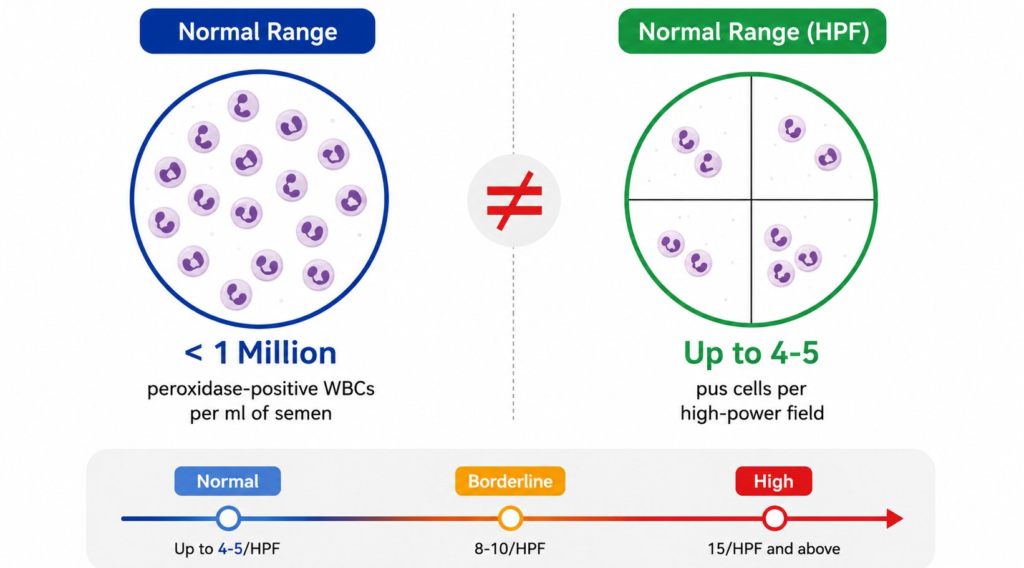
The World Health Organization sets the actual medical cutoff at fewer than 1 million peroxidase-positive white blood cells per millilitre of semen. That’s the real definition of leukocytospermia — cross that line, and you’re technically in pyospermia territory.
But measuring an exact concentration per millilitre needs a specialised stain and a technician trained to run it. Diagnostic labs look through the microscope and estimate how many round cells turn up per high-power field — the “8-10/HPF”.
The two scales simply don’t line up, and that mismatch is exactly why so many normal-ish reports look alarming. Fertility specialists treat up to 4-5 pus cells per high-power field as within the range of normal. Once you’re consistently seeing double digits — 15, 20, or higher — that’s when a closer look makes sense.
So if your report says 8-10/HPF and nothing else seems off? Don’t panic just yet. Get it read alongside your full semen analysis — sperm count, motility, morphology — instead of reacting to one number sitting on its own. A man with a normal count, healthy motility, and an isolated 8-10/HPF reading is in a very different situation than one whose entire report is off. Context changes everything here.
Pus Cells vs. Epithelial Cells: Don’t Mix These
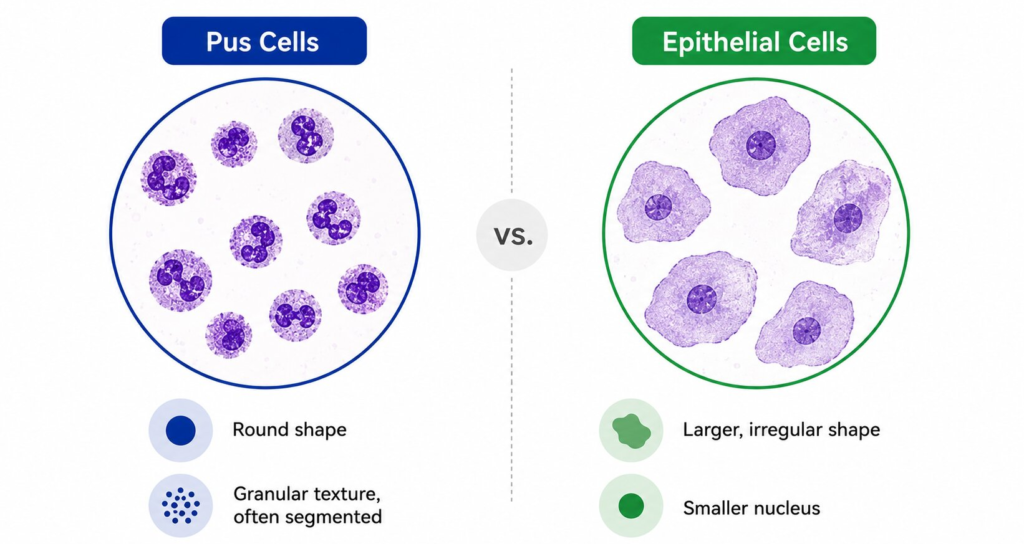
Quick tangent, because this trips up a lot of patients. Semen samples often contain epithelial cells too — cells naturally shed from the lining of the reproductive tract.
Epithelial cells tend to be larger, with an irregular shape and a smaller nucleus. Pus cells are rounder, with a more granular, sometimes segmented look. Mislabeling isn’t rare — which is exactly why an unusually high count deserves a second opinion before anyone reaches for antibiotics.
What Causes High Pus Cells in Semen?
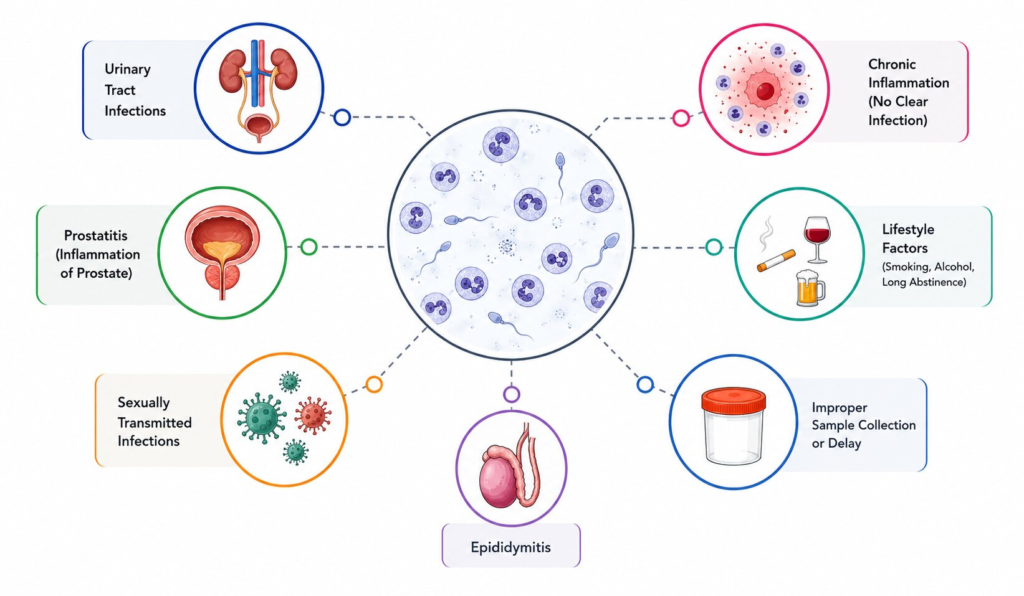
Genuine pyospermia usually points to inflammation or infection somewhere along the male reproductive tract — the prostate, the epididymis, the urethra, or the seminal vesicles.
Genital tract infections are estimated to play a role in roughly 10 to 15 percent of male infertility cases. And separate research has found leukocytospermia itself in anywhere from 10 to 30 percent of men being evaluated for fertility problems. That’s a fairly wide range, but it tells you something useful: this finding is common, and it’s rarely a fertility death sentence on its own.
Common culprits include:
- Urinary tract infections
- Prostatitis, or inflammation of the prostate
- Sexually transmitted infections
- Epididymitis
- Chronic inflammation with no clear infection at all — yes, that happens too
Lifestyle habits like smoking, heavy drinking, and even unusually long abstinence before the test can nudge the numbers up slightly, no infection required. Even a poorly collected sample — say, one that sat around too long before reaching the lab, or picked up contamination from the collection container — can throw off the count and make things look worse than they are.
Symptoms and How Doctors Confirm It
Plenty of men with mildly raised pus cells feel completely fine — no symptoms at all. When there’s an active infection, though, you might notice painful urination, discomfort during ejaculation, unusual discharge, or a dull ache in the pelvic region.
If your semen analysis flags a genuinely high count, the usual next step is a semen culture — a test that looks specifically for bacteria rather than just counting cells. It’s entirely possible, and fairly common, to have a raised pus-cell count alongside a completely clean culture, meaning there’s no active infection needing treatment.
An increased white blood cell count can indicate inflammation, but leukocytospermia does not necessarily mean a bacterial or viral infection is present. Some clinics also run a urine test alongside the culture, since urinary tract infections can sometimes spill over and skew the semen count too, even when the reproductive tract itself is fine.
Does It Really Affect Fertility?
Yes. High levels of white blood cells can generate oxidative stress, which may lower sperm motility, damage sperm morphology, and even affect sperm DNA integrity over time. Researchers still debate exactly how much this shifts the odds for any one couple, and results vary quite a bit between studies.
Pus cells are only one possible factor in male infertility, alongside issues involving sperm production, hormonal problems, blockages, infections, and other reproductive conditions.
But plenty of men with pyospermia still conceive naturally or with fertility treatment, so one flagged number rarely tells the whole story. When male-factor findings are mild, IUI may be considered in some couples depending on the sperm count, motility, female partner’s fertility factors, and overall diagnosis.
For more significant sperm-related problems, ICSI may be considered as part of IVF because a single sperm is injected directly into an egg. For the fuller picture of what every parameter in your report means for conception, our guide on reading a semen analysis report walks through each one in detail.
Treatment: What Actually Helps
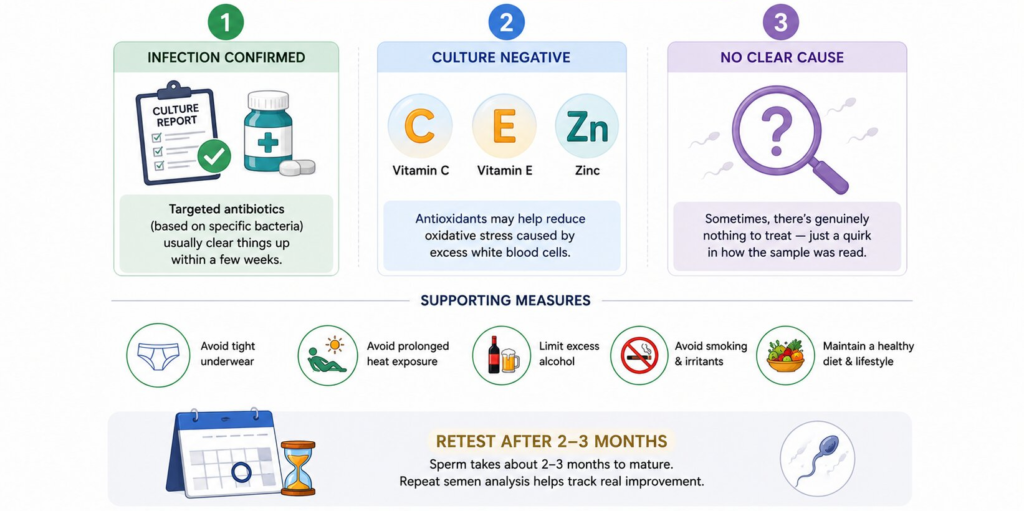
Treatment depends entirely on the cause, which is why guessing — or self-medicating — rarely works out well.
- If a culture confirms infection: targeted antibiotics, chosen based on the specific bacteria involved, usually clear things up within a few weeks.
- If the culture comes back clean: your doctor may still suggest antioxidants like vitamin C, vitamin E, or zinc, since these can help offset the oxidative stress caused by excess white blood cells.
- If nothing specific turns up at all: sometimes there’s genuinely nothing to treat — just a quirk in how the sample was read.
Avoiding irritants — tight underwear, prolonged heat exposure, excess alcohol — helps too, though these work best as supporting measures rather than a fix on their own. Whatever the cause, most doctors will want a repeat semen analysis after two to three months, since sperm takes roughly that long to mature and any real improvement needs time to show up on paper.
When Should You See a Fertility Specialist?
Book an appointment if:
- Your pus cell count stays elevated across repeat tests
- You notice pain, discharge, or fever alongside the raised count
- You’ve been trying to conceive for over a year without success
- Your semen culture comes back positive for bacteria
If further evaluation is needed, knowing what to expect during your first visit to a fertility clinic can make the testing process easier to understand.
conclusion

A raised pus cell count looks scarier on paper than it usually is in real life. Most of the time, it’s a mismatch between how your lab reports the number and how the WHO actually defines it — not a sign that something’s seriously wrong. The real value comes from reading it alongside your full report and, if needed, a proper culture, rather than reacting to one red-flagged line.
If your semen analysis report has you worried about pus cells, consult Dr Rahul Patel at Kalyan Women’s Hospital & IVF Center, Palanpur, for an accurate diagnosis and a treatment plan built around your actual results — not just one flagged number on a page.
FAQs
It sits on the higher side of what most labs treat as borderline, but it’s rarely a red alert by itself. Get it checked alongside your full semen report and a semen culture before assuming the worst.
In most cases, yes. If an infection is behind it, the right antibiotics usually resolve it. If it’s not infection-related, antioxidants and a few lifestyle changes typically bring the numbers down over a few months.
No. A raised count can show up even alongside a completely clean culture — sometimes it just comes down to how the sample was handled or read.
Cutting back on alcohol and smoking, staying hydrated, avoiding excess heat near the groin, and treating any underlying infection all help bring the count down over time.
Not necessarily. Many men with elevated pus cells still conceive naturally or through treatments like IUI or IVF. It’s one factor among several — not a verdict.

One Response