

Have you recently received your semen analysis report and wondered what those numbers and medical terms mean? Did you feel confused by seeing terms like pyospermia or leukocytospermia?
It is usually common to feel confused because semen analysis tests contain several measurements. Also, which values are considered normal and which ones may need attention leaves you with many questions rather than answers.
In this guide, we explain how to read a semen analysis report, understand the normal WHO reference values, and know when you should consult a fertility specialist.
What Is a Semen Analysis Test?
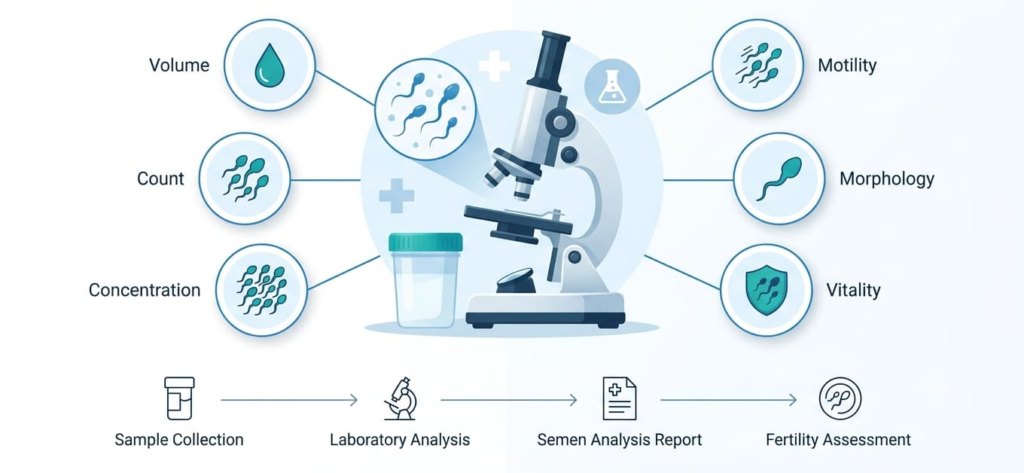
A semen analysis test is a fertility test for men that examines your semen sample under a microscope. It is also known as a sperm test or seminogram.
This semen test helps us to assess the following aspects of sperm health:
- Semen volume
- Sperm count
- Sperm concentration
- Sperm motility
- Sperm morphology
- Sperm vitality
We suggest this test for those couples who are unable to conceive or who are concerned about male infertility. This test helps us understand the causes of male infertility so we can suggest the appropriate treatment for your needs. Since fertility depends on both partners, evaluating female fertility is also an important part of the overall assessment.
Let’s take a closer look at each parameter in a semen analysis report.
How to Read a Semen Analysis Report
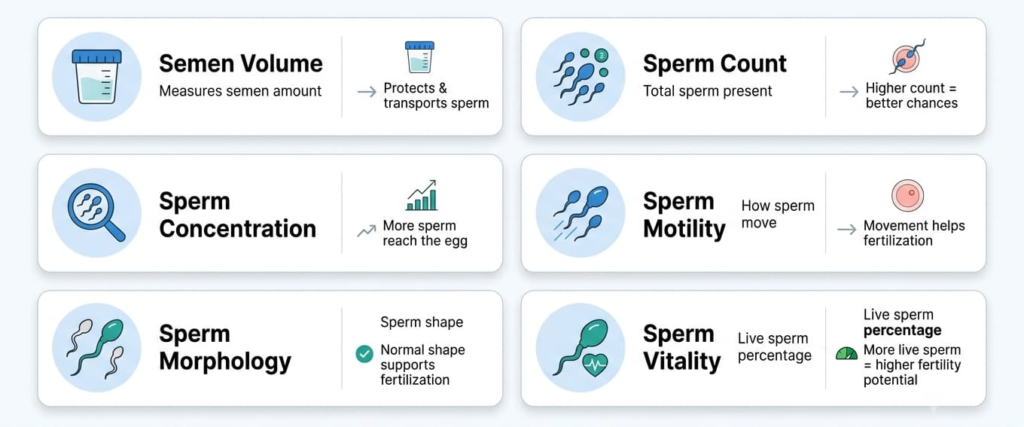
The purpose of each parameter in the semen analysis report is different. Knowing what each parameter represents helps interpret your results more effectively.
The table below explains what each parameter measures and why it matters:
| Parameters | What It Measures | Why Is It Important |
| Semen Volume | Amount of semen released during ejaculation | Helps transport and protect your sperm cells |
| Sperm Count | The total number of sperm contained in your semen sample | The healthier the sperm count, the better the chances of fertilization |
| Sperm Concentration | The number of your sperm per millilitre (mL) of the semen | High concentration means that more sperm have a chance to reach the egg |
| Sperm Motility | The movement of your sperm cells towards the egg | Motility is an important factor for the sperm’s ability to fertilize the egg |
| Sperm Morphology | The shape of your sperm cells | A normal sperm shape may ensurefertilization |
| Sperm Vitality | The number of live sperm in your semen sample | A higher percentage of live sperm increases the chances of fertilization |
Normal Semen Analysis Values (WHO Reference Guide)
We use the World Health Organization (WHO) reference value to interpret semen analysis. These help us decide whether the different semen parameters fall within the expected values or not.
Normal semen analysis values as per the WHO reference guide is as follows:
| Parameter | WHO Reference Value |
| Semen volume | ≥ 1.4 mL |
| Sperm concentration | ≥ 16 million/mL |
| Total sperm count | ≥ 39 million per ejaculate |
| Progressive motility (Forward movement) | ≥ 30% |
| Total motility (Overall movement) | ≥ 42% |
| Morphology (normal forms) | ≥ 4% |
| Semen Vitality | ≥ 54% |
| Semen pH | ≥ 7.2 |
It is important to understand that one abnormal value does not mean you have infertility.
What Do Pus Cells in Semen Mean?
Pus cells, which are white blood cells or leucocytes, help your body to fight against infection. A small number of pus cells in your semen is usually normal.
However, according to the WHO Laboratory Manual for Examination and Processing of Human Semen (6th edition), anything above 1 million white blood cells per millilitre of semen is considered abnormal.
A higher white blood cell count means there is inflammation or infection in the male reproductive tract, such as the prostate, seminal vesicles, or even the urinary tract.
If your semen analysis shows an increased number of pus cells, consult a fertility specialist for further evaluation. If an underlying fertility problem is diagnosed, understanding how IVF treatment is performed can help you prepare for the next steps.
Pyospermia and Leukocytospermia: Can They Affect Fertility?
Pyospermia, also known as leukocytospermia, is a condition in which there is an excess of white blood cells in your semen. This condition may negatively impact the health of your sperm.
According to a study, an excess of white blood cells may be associated with reduced sperm concentration, motility, and morphology.
But its effects vary from one individual to another. Many people who suffer from this condition are still able to conceive through the right treatment. That’s why it is important to identify and treat the underlying cause, which may help improve your semen quality and fertility.
Common Abnormal Semen Analysis Results Explained
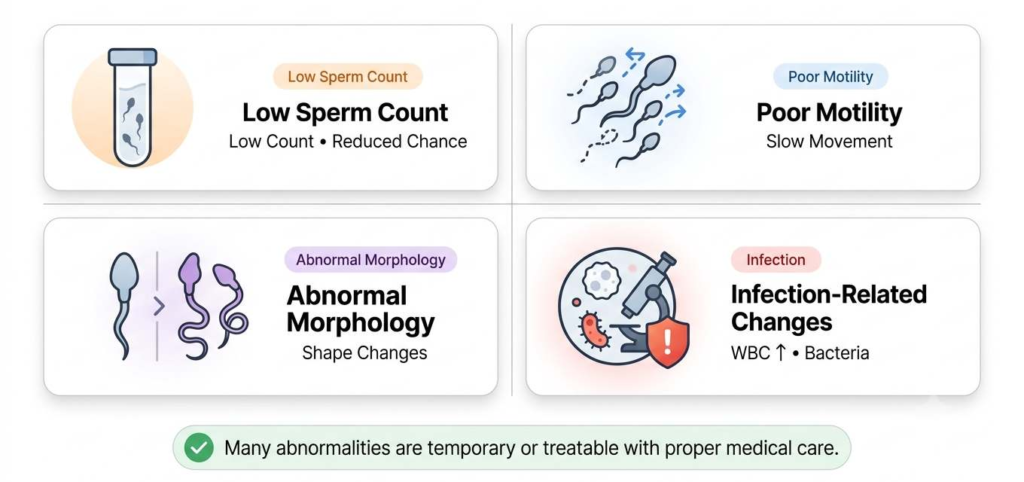
When one or more parameters are not within the expected range, it means an abnormal semen analysis result.
| Abnormal Result | Possible Causes | What it means for fertility |
| Low Sperm Count | Hormonal problems, varicocele, lifestyle changes | A low number of sperm reduces the probability of conception |
| Poor Motility | Stress, infections, and an unhealthy lifestyle | Poor sperm movement may make it difficult for sperm to reach the egg |
| Abnormal Morphology | Morphological changes in your sperm | Pregnancy may still occur if other parameters are normal |
| Infection-Related Changes | High number of white blood cells, presence of bacteria | Early treatment is required to improve your sperm health |
The above condition can be temporary or treatable, depending on your underlying cause. If natural conception remains difficult despite treatment, your fertility specialist may discuss options such as IVF or IUI depending on your diagnosis.
How to Improve Sperm Count and Semen Quality
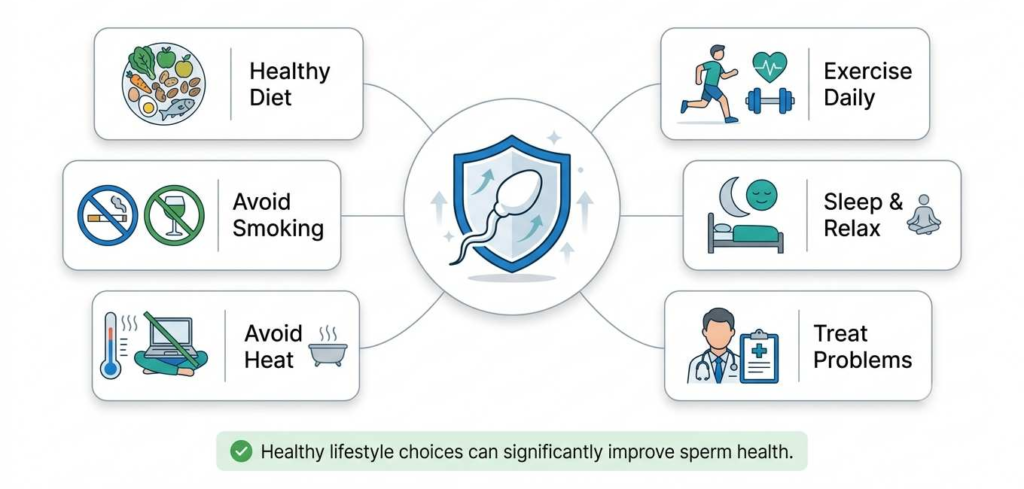
Small modifications in your lifestyle can have a great impact on your sperm count and the quality of semen.
- Take a nutritious diet
- Do exercise regularly and maintain your weight
- Avoid smoking and limit alcohol
- Get proper sleep and avoid stress
- Do not expose your testicles to excessive heat
- Seek treatment for infections or hormonal problems if diagnosed
When Is a Semen Culture Test Needed?
The semen analysis measures the quality of your sperm, whereas the semen culture is used to look for any signs of infection you have. In case you have symptoms such as painful ejaculation or painful urination, or other recurrent urinary or reproductive tract infections, and your semen analysis report reflects an increased amount of pus cells, your fertility specialist may suggest a semen culture test.
When Should You See a Fertility Specialist?
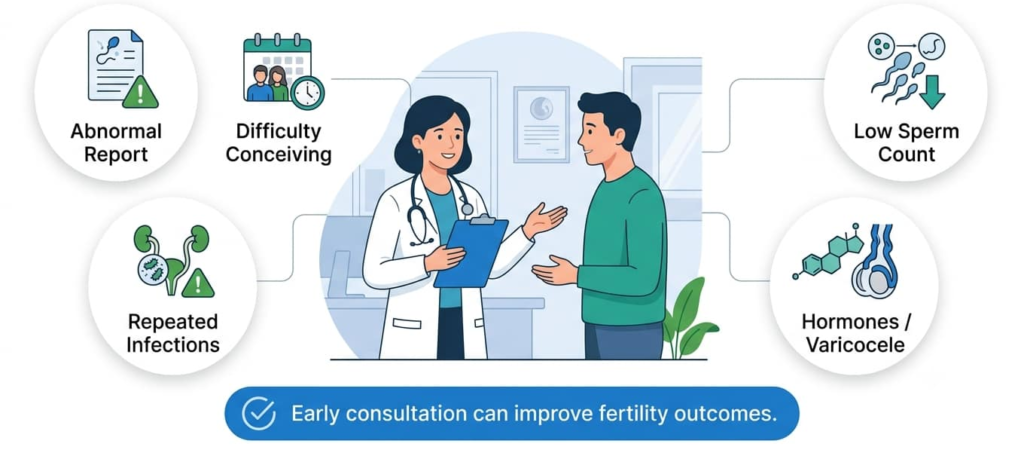
Consult a fertility specialist if you:
- Have had abnormal results on semen analysis
- Have not been able to conceive
- Have recurrent infections or urinary problems
- Are experiencing low sperm count or other semen issues
- Have suffered from hormonal imbalance, varicocele, or testicular trauma in the past
- Abnormal semen analysis
If this is your first consultation, it may help to know what happens during your first visit to a fertility clinic and which tests are commonly recommended.
Final Thoughts: Understanding Your Semen Analysis Report with Confidence

A semen analysis report is an important step in evaluating male fertility, but it should always be interpreted by an expert. Some couples may require advanced fertility treatments such as IVF after a complete fertility evaluation.
If you have concerns about your results, consult Dr Rahul Patel at Kalyan Women’s Hospital & IVF Center in Palanpur for an evaluation, an accurate diagnosis, and personalised fertility care.
FAQs
Most fertility specialists recommend abstaining from ejaculation for 2 to 7 days before providing a semen sample. This helps ensure accurate measurement of sperm count, motility, and semen volume. Following your laboratory’s instructions is important for reliable results.
Yes. In many cases, sperm quality can improve with healthy lifestyle changes such as eating a balanced diet, exercising regularly, maintaining a healthy weight, quitting smoking, limiting alcohol, managing stress, and getting adequate sleep. Since sperm production takes about 70–90 days, improvements may take several months to appear in a repeat semen analysis.
Yes. Because sperm parameters naturally fluctuate over time, doctors often recommend repeating the semen analysis after 2–3 months, especially if the first report shows abnormal findings. A repeat test helps confirm whether the abnormality is temporary or persistent.
Yes, natural pregnancy is still possible in many cases of mild to moderate low sperm motility, particularly if sperm count and morphology are within the normal range. However, conception may take longer, and treatment may be recommended if pregnancy does not occur after an appropriate period.
Yes. While men can remain fertile for many years, increasing age may gradually reduce sperm quality, including sperm motility, morphology, and DNA integrity. Advanced paternal age may also slightly increase the time required to achieve pregnancy.