
“Your estrogen is high.”
If you have ever heard this after a blood test, you may have immediately wondered:
“ Is it dangerous?”
“ Could it explain my irregular periods?”
“ Will it affect my chances of getting pregnant?”
As a fertility specialist, I would first reassure you that one high estrogen reading does not always mean there is a hormonal problem. Estrogen naturally rises and falls during your cycle, and you need to understand its level in the right context.
So, before you worry about the number on your report, let’s understand what high estrogen in women can mean, causes of high estrogen and when you may need treatment.
What Does High Estrogen in Women Mean?
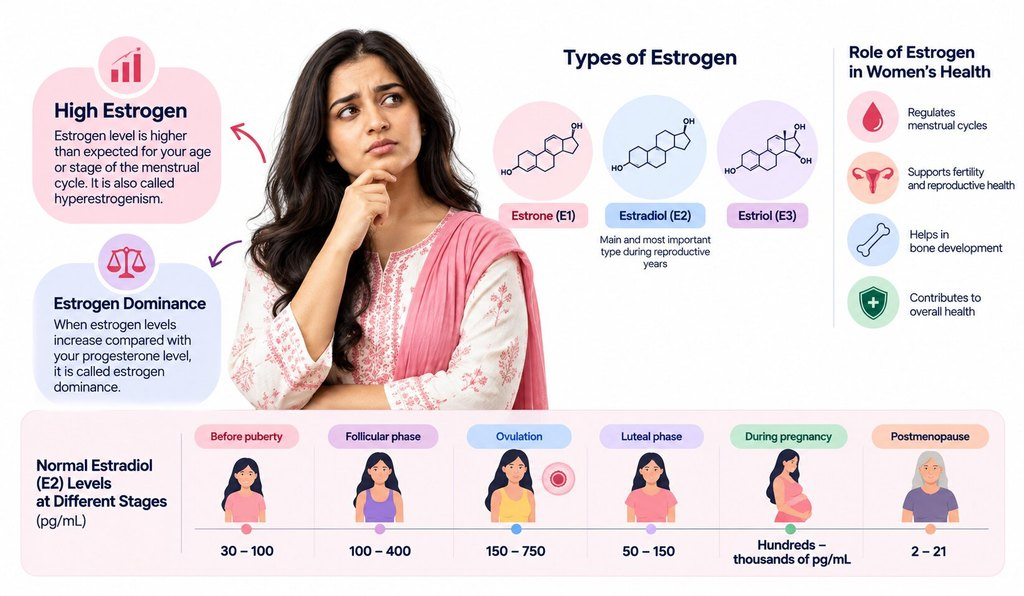
High estrogen in women means your estrogen level is higher than expected for your age or stage of the menstrual cycle. It is also called hyperestrogenism.
Sometimes, when estrogen levels increase compared with your progesterone hormone level, it is called estrogen dominance.
Before we understand more about high estrogen, let’s understand what exactly estrogen is and its role in your reproductive health.
Estrogen is a steroid hormone that regulates your menstrual cycles, fertility, bone development and your overall health.
There are basically three forms of estrogen:
- Estrone (E1)
- Estradiol (E2)
- Estriol (E3)
The main and most important type of hormone related to reproductive years is estradiol (E2), and its levels differ as follows:
| Stage of life or cycle | Estradiol level (pg/mL) |
| Before puberty | 30-100 |
| Follicular phase | 100-400 |
| Ovulation | 150-750 |
| Luteal phase | 50-150 |
| Postmenopause | 2-21 |
| During pregnancy | Hundreds-thousands of pg/mL |
What Are the Symptoms of High Estrogen in Females?
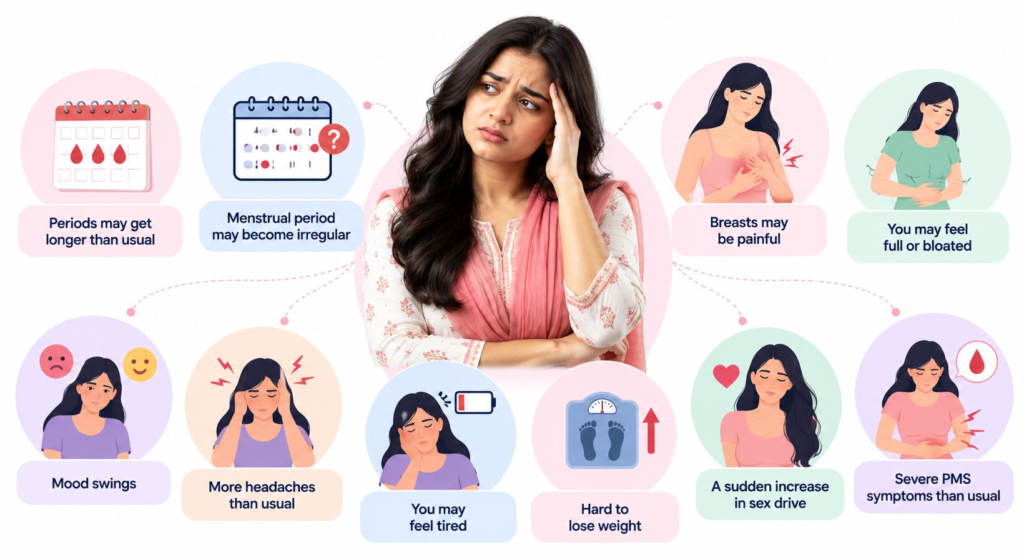
High estrogen symptoms in females can vary from person to person.
You may notice:
- Your periods may get longer than usual
- You may find that your menstrual period is getting irregular
- You may feel that your breasts are painful
- You may feel full or bloated
- You may have mood swings
- You may suffer more headaches than usual
- You may be tired
- You may find it hard to lose weight
- A sudden increase in sex drive
- Severe PMS symptoms than usual
What Causes High Estrogen in Women?
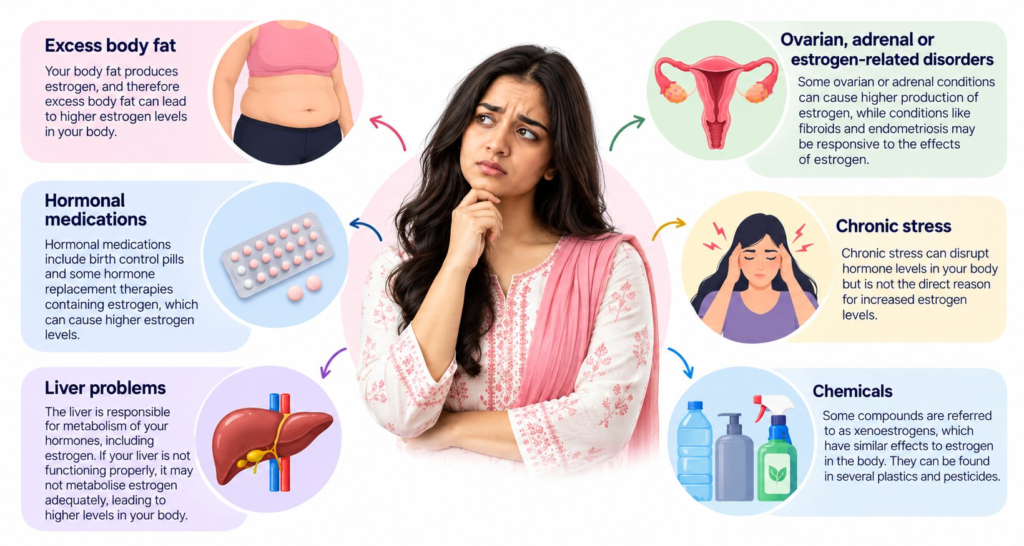
Your body may have high levels of estrogen as a result of:
- Excess body fat: Your body fat produces estrogen, and therefore excess body fat is a cause of high levels of estrogen in your body.
- Hormonal medications: Hormonal medications include birth control pills and some hormone replacement therapies containing estrogen, causing an incidence of high levels of hormones.
- Liver problems: The liver is responsible for metabolism of your hormones, including estrogen. If your liver is not functioning properly, it may not be metabolising the estrogen adequately and can lead to high levels of estrogen in your body.
- Ovarian, adrenal or estrogen-related disorders: Some ovarian or adrenal conditions can also cause higher production of estrogen, while benign or malignant conditions like fibroids and endometriosis may be responsive to the effects of estrogen.
- Chronic stress: Chronic stress can disrupt hormone levels in your body but is not the direct reason for increased estrogen levels.
- Chemicals: Some compounds are referred to as xenoestrogens, which have similar effects to estrogen in the body. They can be found in several plastics and pesticides.
What Happens When Estrogen Levels Are High?
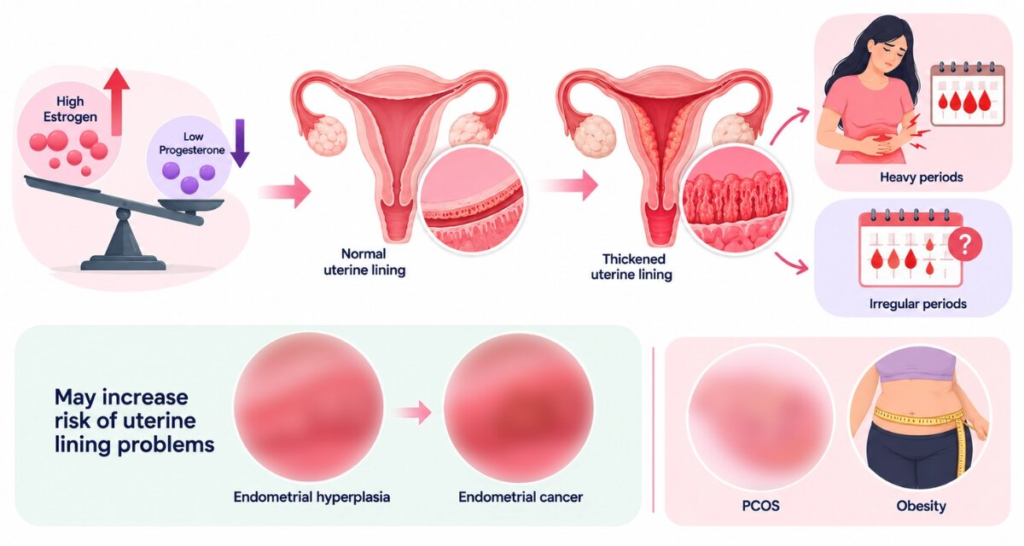
Normally, estrogen is responsible for stimulating the growth of your uterine lining within the first part of your menstrual cycle. After ovulation, progesterone increases and is responsible for regulating the thickness of your lining.
An excessive amount of estrogen and a lack of progesterone influence this process in a negative way. Therefore, the lining gets thicker for a longer period of time, resulting in heavy and irregular periods.This occurs in cases of PCOS or obesity because of the absence of regular ovulation and low levels of progesterone.
In 2016, research was published in the Obstetrics & Gynaecology Science journal based on the analysis of 9,888 premenopausal and perimenopausal women who had abnormal uterine bleeding (4.6%) and thickened uterine lining (2.3%). In those patients who underwent biopsy, 8.6% were diagnose
d with endometrial hyperplasia or endometrial cancer.
Such results highlight the importance of investigating persistent irregular and heavy bleeding. If an evaluation identifies a concerning uterine or endometrial condition, further assessment may be needed before deciding on appropriate cancer treatment.
How Is High Estrogen Diagnosed?
First, we may ask about your menstrual history, symptoms and medications. Sometimes, these alone cannot confirm high estrogen.
So, we may suggest the following tests for the diagnosis of high estrogen:
- Blood test: We may suggest estrogen level tests, as well as several other hormone tests.
- Liver function test: These tests are performed to find out if there is some problem in your liver leading to hormonal imbalance.
- Pelvic ultrasound: Your uterus, ovaries, and uterine lining may be checked.
- Additional tests: They can be performed in case of fibroids or endometriosis.
When the uterine cavity needs a closer examination, a hysteroscopy procedure may also be considered.
How to Control Estrogen Level Naturally
If you are wondering how to control estrogen levels, small lifestyle changes may support healthy hormone balance, but they cannot replace medical treatment if you have an underlying medical condition.
Try to:
- Maintain a healthy weight
- Eat more vegetables, fruits, whole grains and fibre
- Reduce intake of overly processed foods and too much alcohol
- Engage in physical activities and exercises
- Ensure adequate and good-quality sleep
- Manage stress
- Do not use any hormonal or herbal supplements that claim to regulate estrogen
Treatment for High Estrogen in Females
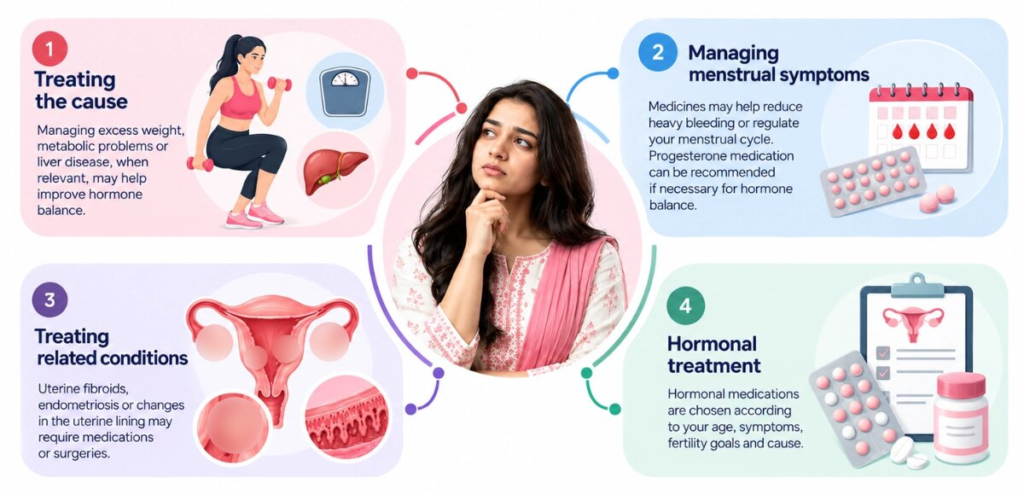
The treatment for high estrogen in females are as follows:
- Treating the cause: Managing excess weight, metabolic problems or liver disease, when relevant, may help improve hormone balance.
- Managing menstrual symptoms: Medicines may help reduce heavy bleeding or regulate your menstrual cycle. The use of progesterone medication can be recommended if necessary for the balancing effect of estrogen.
- Treating related conditions: Uterine fibroids, endometriosis, or changes in the uterine lining may require medications or, in some cases, laparoscopic gynecological surgeries.
- Hormonal treatment: Hormonal medications are chosen according to your age, symptoms, fertility goals and cause.
Can High Estrogen Affect Fertility?
Yes, high estrogen can affect fertility in some women, particularly when it disrupts ovulation or the normal menstrual cycle.
When fertility concerns persist, understanding what to expect during your first visit to a fertility clinic can help clarify which tests may be needed. Hormonal and ovulation-related problems can also be among the causes of infertility in women, which may require a broader fertility evaluation.
“High estrogen does not automatically mean infertility. We need to understand what is causing the hormonal imbalance and whether it is affecting ovulation or the reproductive organs.” – Dr Rahul Patel, Gynaecologist and IVF Specialist
When fertility treatment is being considered, hormone levels are interpreted alongside ovulation, ovarian function and other factors that influence IVF treatment.
Final Thoughts: Understanding High Estrogen and Supporting Your Fertility Journey
If you are trying to conceive, hormonal changes can feel like one more thing to worry about. But a high estrogen result does not tell the whole story.
At Kalyan Women’s Hospital & IVF Center, Dr Rahul Patel can help you understand your hormone levels in the context of your fertility goals. With the right guidance, you can understand your options and move forward with greater clarity and confidence.
FAQs
High estrogen may affect the menstrual cycle and reproductive system. When estrogen is high relative to progesterone, the uterine lining may become thicker for longer, which can contribute to heavy or irregular periods. Persistent abnormal bleeding should be evaluated by a healthcare professional.
Lifestyle changes may support healthy hormone balance, but they cannot replace treatment for an underlying medical condition. Maintaining a healthy weight, eating more vegetables, fruits, whole grains and fibre, exercising regularly, getting adequate sleep, managing stress and limiting excessive alcohol may support overall hormone health.
A balanced diet containing vegetables, fruits, whole grains and fibre can support overall health and hormone metabolism. Rather than focusing on a single “estrogen-lowering” food, it is generally more useful to maintain a varied, nutrient-rich diet.
If you have high estrogen, focus on limiting overly processed foods and excessive alcohol as part of an overall healthy diet. You should also avoid using restrictive diets or supplements marketed as estrogen “detoxes” without medical advice.
High estrogen, particularly when it is not balanced by adequate progesterone, can contribute to changes in the uterine lining. This may result in heavy or irregular menstrual bleeding, especially when regular ovulation is disrupted.
A single high estrogen reading does not necessarily mean that something is wrong because estrogen naturally fluctuates throughout the menstrual cycle and changes during different stages of life. However, persistently abnormal levels or symptoms such as heavy and irregular bleeding should be evaluated to identify the underlying cause.