
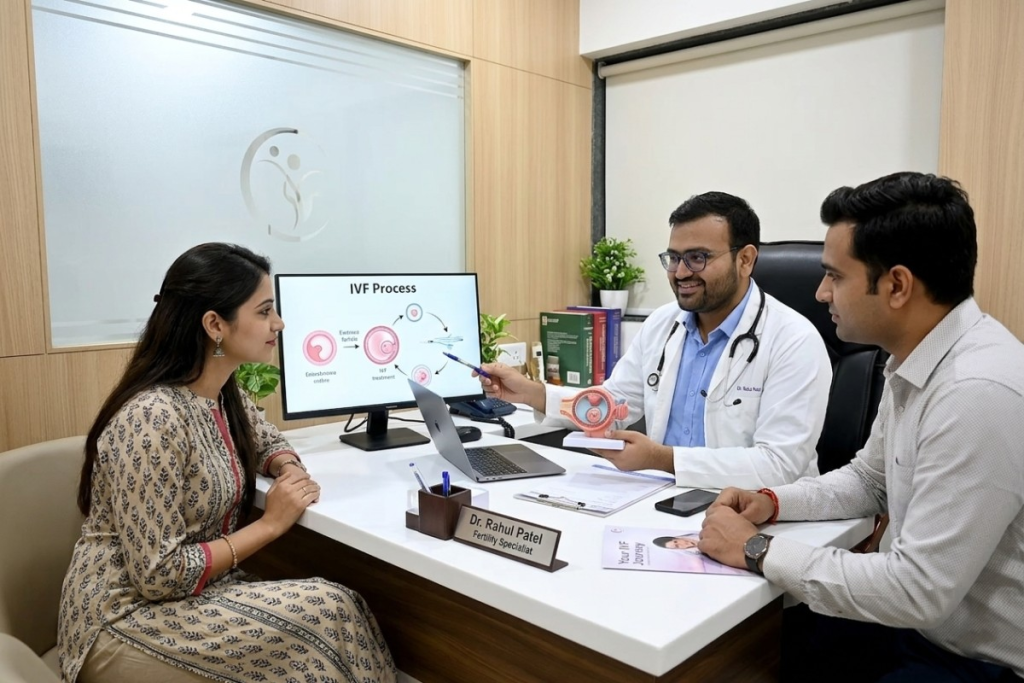
Out of 10 couples, around 1 couple may face infertility in India. AIIMS declared that roughly 85% women do not know their fertility window. Only 8% women know that fertility decreases after the age of 35 years.
This gap of unawareness in small towns too, not just big cities. Couples from Palanpur and all around Banaskantha seek guidance from a fertility clinic. For many couples first fertility consultation for IVF treatment is a little nervousness with hope too.
That’s why knowing what to expect at the first fertility appointment is important. Such as tests, questions and the next step help couples to begin their parenthood journey.
Why the First Fertility Consultation Matters
Your first fertility consultation is not just a medical visit. But helps you move from wondering ‘why’ to knowing ‘how’. We advised that both partners should attend the first fertility session with us. By checking both partners, we need to find the main root cause before it makes bigger challenge. Early diagnosis helps us prepare together.
With early treatment planning, you will gain answers, comfort, and a clear direction filled with hope. The first step is not about jumping into a medical procedure. It is about getting your peace of mind back.
At Kalyan Women’s Hospital & IVF Center, Palanpur, we focus on your concerns and give you answers that you deserve. It is the moment you stop feeling stuck and start building a clear, simple path toward your future child.
What Actually Happens During Your First Appointment
We discuss your reproductive history, also overall health. Like your period cycle, any health problems, past pregnancies, and the time trying to conceive.
Your lifestyle may affect your fertility, such as your weight, stress level, diet, or habits like alcohol or smoking and sleep patterns.
After, we will explain step by step fertility testing process, so you know what to expect. And if needed, we may do a physical examination. We also do IVF consultations if it is required in your situation.
By the end, you will leave with clarity and a plan, so you can move forward with confidence alongside us.
Fertility Tests for Women Explained
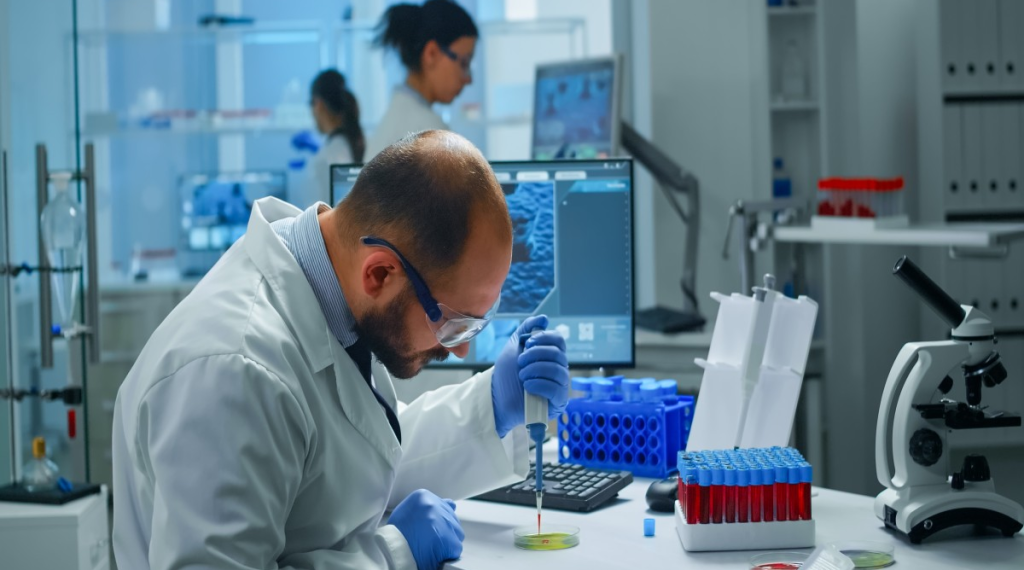
When you come in for a fertility test for women, we advised following tests to understand how your body is working. Each test gives us what might be affecting your conception.
| Test | Purpose |
| Hormone testing | Check hormones that play a role in fertility |
| AMH test for fertility | Measures AMH levels see how many eggs remain |
| Ultrasound fertility scan | Looks at ovaries, uterus, and overall reproductive health |
| Ovulation testing | Monitors cycle patterns to confirm regular ovulation |
| HSG test (if needed) | Examines the fallopian tubes and uterus using a gentle X‑ray dye test |
| Egg quality assessment | Reviews egg health to guide treatment options |
These tests give us an overall view of your fertility. So we can answer your questions and guide the right treatment options. In some women, hormonal conditions such as irregular ovulation or PCOS treatment may become part of the discussion if the test results indicate hormonal imbalance.
Fertility Tests for Men
Male fertility evaluation is as important as female fertility when assessing a couple’s chances of conception. The following are some fertility tests for men and other lifestyle discussions.
| Test | Purpose |
| Semen analysis | Measures sperm count, movement (motility), and shape (morphology) |
| Sperm health assessment | Reviews overall sperm quality and function |
| Hormonal evaluation (if needed) | Checks hormone levels that influence sperm production |
| Lifestyle factors (discussion) | Looks at diet, stress, sleep, and habits that may affect sperm quality |
When sperm quality issues are identified, treatments such as the ICSI procedure may sometimes be recommended to improve fertilization chances during assisted reproduction.
The results from male and female evaluations are considered together. To help us give a complete picture of the couple’s fertility health.
How Long Does Fertility Testing Take?
Couples often ask after hearing about the tests: how long does fertility testing take overall? Most fertility tests are complete within one menstrual (period) cycle. Some blood tests are usually done based on the timing of your cycle. The semen analysis test is flexible, and it can be done anytime that is convenient for you.
When the testing is finished, we will discuss the findings and help you plan the next stage of care.
Questions to Ask an IVF Doctor
Many couples are confuse what questions to ask a fertility doctor at the first visit. The following are questions based on the discussion area, along with why this matters.
| Topic | Questions to Ask | Why It Helps |
| Cause | What could be causing our infertility? Could it be ovulation, sperm health, age, or something unknown? | Find the right treatment |
| Tests | What tests do we need, and why? Do any depend on my cycle? How long will the tests take? | Clear test purpose |
| Treatment Options | Should we try IUI, IVF, or another method? What are the success rates for my age? Which option do you think fits our case best? | Choose the best option |
| Risks | What side effects or problems should we be aware of? | Prepare ahead |
| Timeline & Cost | How many cycles might we need? How long does it usually take? What will the total cost be? | Plan finances & time |
| Lifestyle | Are there changes in diet, exercise, or habits that could improve our chances? | Boost success chances |
Remember, asking questions is the best way to stay informed and comfortable.
What Questions Should I Be Prepared to Answer at a Fertility Doctor?
At your first fertility consultation, we ask questions to know your situation better. Be prepared for:
- How long have you been trying to conceive?
- Can you tell me about your menstrual cycle? Is it regular? How is the flow? And do you have any symptoms?
- Have you had any past pregnancies or miscarriages?
- What is your medical and surgical history?
- Are you currently taking any medications?
- Does your family have any history of genetic conditions or fertility issues?
- What are your lifestyle habits, such as diet, exercise, smoking, or alcohol use?
- Have you tried any fertility treatments before?
What Happens After Your First Visit?
After your first visit and completed your test, we review all reports and explain what they mean. If infertility is confirmed, we will talk about it clearly. Next, based on this, we create personalized treatment plan that you need.
If assisted reproductive treatment is planned, the doctor will also explain the embryo transfer process, which is one of the final steps in many IVF treatment cycles. A follow‑up visit will be scheduled to check progress. This is the start of your fertility journey, with clear steps and support along the way.
Hope Begins with Your First Visit

Your first visit to Kalyan Women’s Hospital & IVF Center with Dr Rahul Patel in Palanpur is about clarity, not pressure. Early evaluation helps couples understand their options and begin the journey with confidence. With guidance, care, and a personalized plan, you can move forward knowing your fertility journey has truly begun.
FAQs
The first steps of fertility testing usually include a consultation, review of medical history, hormone blood tests, and ultrasound scans for women. For men, a semen analysis is commonly recommended. These tests help doctors understand reproductive health and plan the most suitable treatment.
Most fertility tests are simple and cause little discomfort. Blood tests and ultrasound scans are usually painless. Some procedures, such as the HSG test used to check fallopian tubes, may cause mild cramping for a short time, but the discomfort usually passes quickly.
Some of the most common causes of female infertility include polycystic ovary syndrome (PCOS), thyroid disorders, and problems with ovulation. Other causes may include blocked fallopian tubes, endometriosis, or reduced egg quality due to age.
For your first fertility appointment, bring previous medical records, test reports, details of medications you are taking, and information about your menstrual cycle. If possible, both partners should attend the visit so the doctor can evaluate the couple’s overall fertility health.
Yes, fertility evaluation usually involves both partners. Male fertility factors contribute to nearly half of infertility cases. Doctors typically recommend semen analysis for men along with hormone tests, ultrasound, or ovulation testing for women.
Some fertility tests depend on the menstrual cycle. Hormone blood tests are often done during the early days of the cycle, while ovulation tests are usually performed around the middle of the cycle. Your doctor will guide you on the correct timing based on your cycle pattern.