
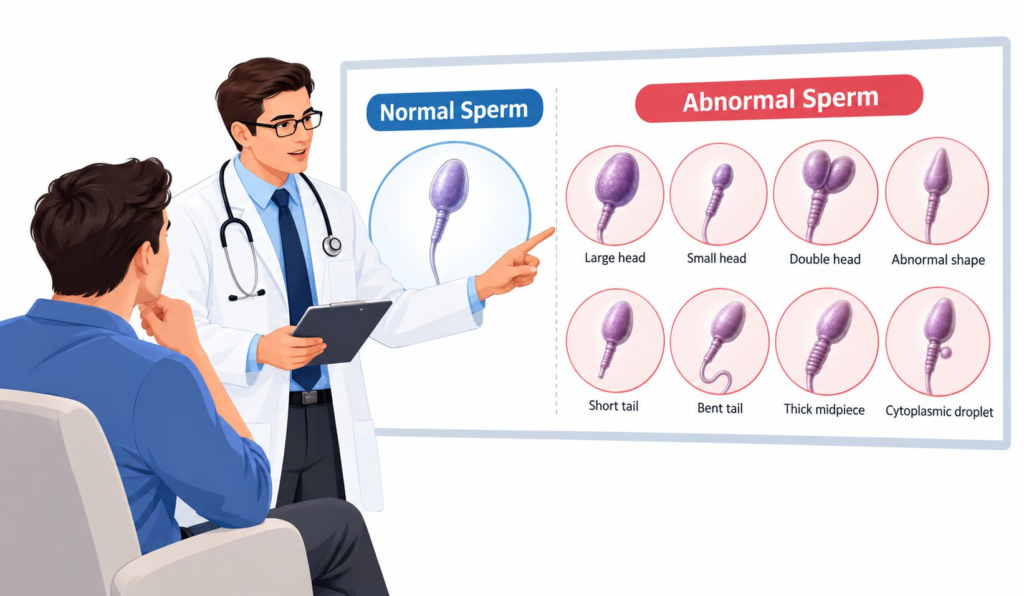
A 32-year-old man came to my clinic with his wife after they had been trying for a baby for almost 10 months. His sperm count was 52 million/mL, which seemed reassuring at first. But when we looked more closely at the report, only 3% of his sperm had a normal shape.
When you see a report like this, it is natural to wonder,
“If the count is fine, then where is the problem?”
I often tell my patients that fertility is not decided by sperm count alone. Sperm shape, movement and overall quality also play an important role in fertilisation.
So, what does an abnormal sperm report really mean?
Why can sperm develop these changes, and when can they affect your chances of conception?
Male infertility can involve problems with sperm count, movement, or shape, so understanding these factors is an important part of a fertility evaluation.
Let’s understand it step by step.
What Is Abnormal Sperm?
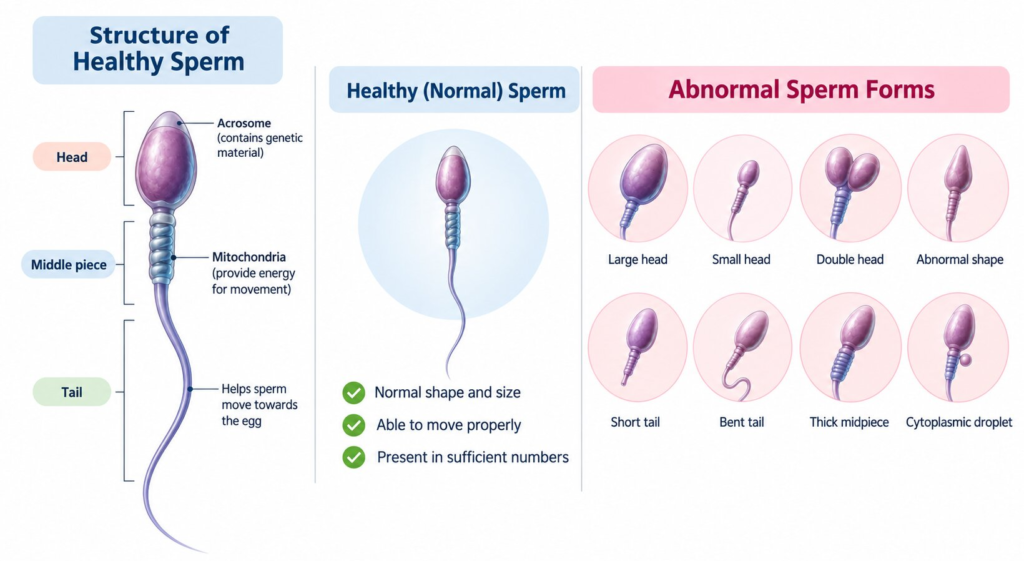
Abnormal sperm is defined as sperm cells that have an abnormal shape, size or structure.
Then what is healthy sperm?
Healthy sperm means sperm cells that are present in semen in sufficient numbers, able to move properly, and have a normal shape for fertilisation of the eggs.
Sperm can be divided into three major parts:
- The head: It is oval in shape and has an acrosome on its surface. The acrosome contains the genetic material.
- The middle piece: This piece of sperm has mitochondria that provide energy for movement.
- Tail: A long tail helps sperm move toward the egg.
If there is any abnormality in sperm, it may be difficult for fertilisation and conception.
So let’s look at the abnormal forms of sperm.
Types of Sperm Abnormalities
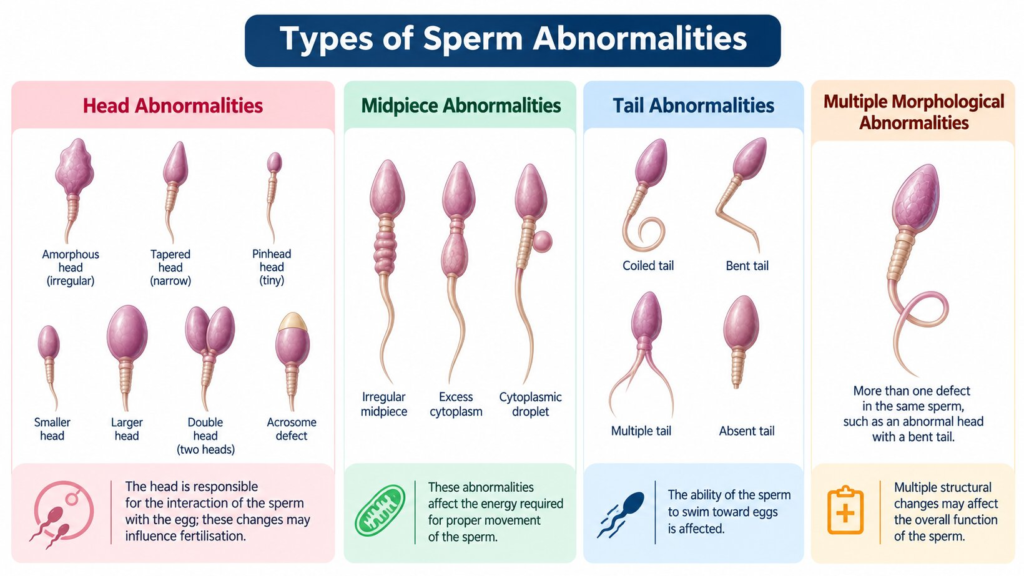
The table below shows sperm abnormality types :
| Type of abnormality | Common abnormal forms | What it may mean |
| Head abnormalities | Amorphous Head (irregular) Head | The head is responsible for the interaction of the sperm with the egg; these changes may influence fertilisation |
| Tapered Head (narrow) | ||
| Pinhead Head (Tiny) | ||
| Smaller Head | ||
| Larger Head | ||
| Double head (two heads) | ||
| Acrosome defects | ||
| Midpiece abnormalities | Irregular midpiece | These abnormalities affect the energy required for proper movement of the sperm |
| Excess cytoplasm | ||
| Cytoplasmic droplet | ||
| Tail abnormalities | Coiled tail | The ability of the sperm to swim toward eggs is affected |
| Bent tail | ||
| Multiple tail | ||
| Absent tail | ||
| Multiple morphological abnormalities | More than one defect in the same sperm, such as an abnormal head with a bent tail | Multiple structural changes may affect the overall function of the sperm |
A 2022 study published in SAG Open Medicine found that head defects were the most common sperm abnormality, seen in 88.8%, followed by midpiece defects (28.4%) and tail defects (8.9%).
What Causes Abnormal Sperm?
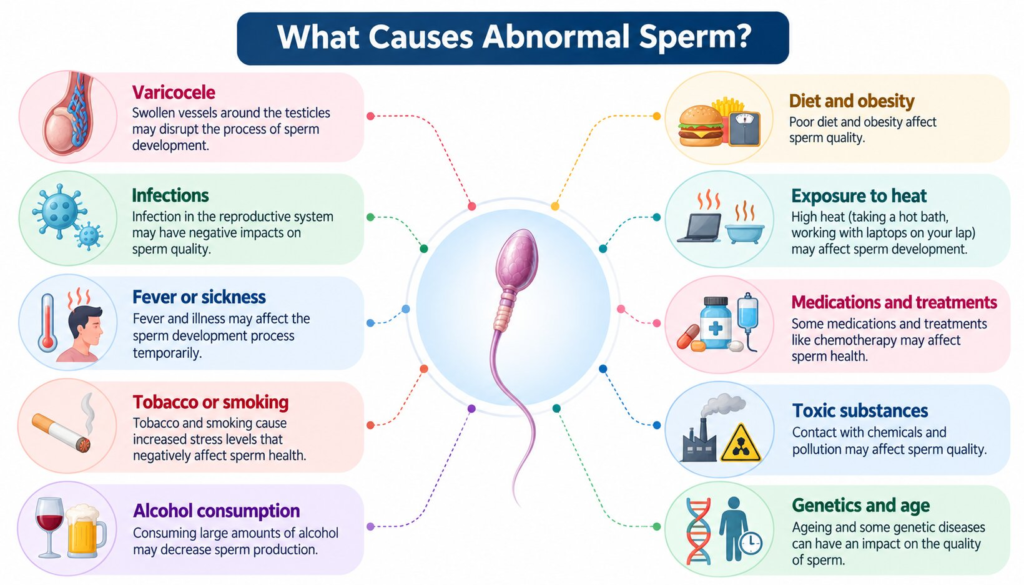
There is no single cause for abnormal sperm because sperm production is a complex process; sometimes more than one factor may affect your sperm.
The table below shows possible causes of abnormal sperm morphology:
| Cause | Effect on sperm |
| Varicocele | Swollen vessels around the testicles may disrupt the process of sperm development. |
| Infections | Infection in the reproductive system may have negative impacts on sperm quality. |
| Fever or sickness | Fever and illness may affect the sperm development process temporarily. |
| Tobacco or smoking | Tobacco and smoking cause increased stress levels that negatively affect sperm health. |
| Alcohol consumption | Consuming large amounts of alcohol may decrease sperm production. |
| Diet and obesity | Poor diet and obesity affect sperm quality. |
| Exposure to heat | High heat (taking a hot bath, working with laptops on your lap) may affect sperm development. |
| Medications and treatments | Some medications and treatments like chemotherapy may affect sperm health. |
| Toxic substances | Contact with chemicals and pollution may affect sperm quality. |
| Genetics and age | Ageing and some genetic diseases can have an impact on the quality of sperm. |
When infection or inflammation is suspected, findings such as pus cells in semen may also be considered during evaluation.
How Are Abnormal Sperm Diagnosed?
A semen analysis test is useful to identify any abnormalities in sperm cells. In this test, semen can be examined microscopically in a laboratory to find out the following characteristics of your sperm cells:
- Sperm count: How many sperm are present in your semen
- Sperm motility: How sperm move
- Sperm morphology: What is the shape, size and structure of your sperm
- Semen volume: Quantity of semen
In morphology testing, the lab gives the percentage of sperm with a normal morphology. The WHO 2021 reference value for normal sperm morphology is 4%.
If you are undergoing your first fertility assessment, your first visit to a fertility clinic may involve reviewing your medical history, discussing fertility concerns, and deciding which tests are appropriate.
Can Abnormal Sperm Affect Fertility?
Abnormal sperm morphology makes pregnancy difficult sometimes, but it doesn’t mean that getting pregnant is impossible.
A 2018 review published in the Journal of Urology included 20 studies on IUI cycles with over 41 thousand patients.
The findings were:
- 12 pregnancies occurred out of every 100 cycles when no more than 4% of sperm had normal shape.
- 14 pregnancies occurred out of every 100 cycles when more than 4% of sperm had a normal shape.
This highlights that sperm shape abnormality alone does not determine whether pregnancy can happen. Other factors, such as sperm count, motility, quality, and your partner’s health, also matter.
Abnormal Sperm Morphology Treatment
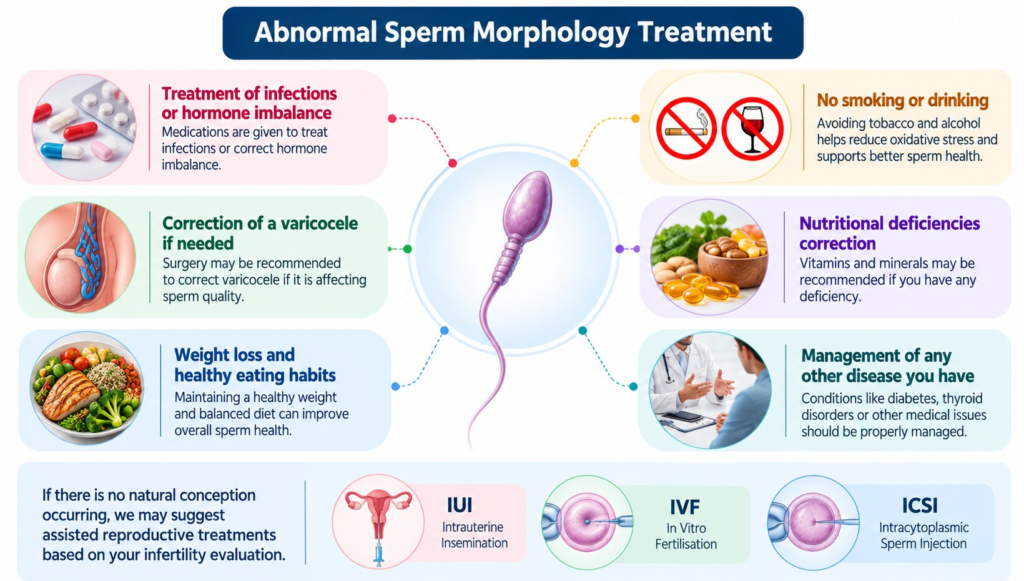
When we talk about abnormal sperm morphology treatments, that cannot mean treatment helps change your sperm morphology.
First, we identify the cause of these alterations, and based on your report, the treatment can be as follows:
- Treatment of infections or hormone imbalance
- Correction of a varicocele if needed
- Weight loss and healthy eating habits
- No smoking or drinking
- Nutritional deficiencies correction
- Management of any other disease you have
In case there is no natural conception occurring, we may suggest IUI, IVF, or ICSI based on your infertility evaluation. The difference between IVF and IUI depends on factors such as the cause of infertility, sperm and egg factors, and the overall fertility evaluation.
How to Improve Sperm Health
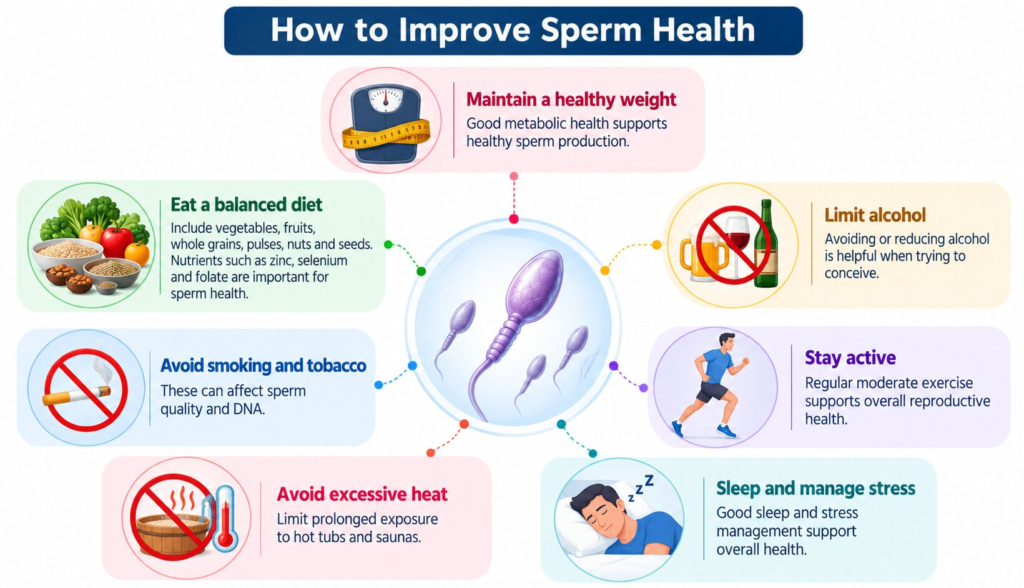
If you want to improve your sperm health, small changes in your daily routine can make a difference.
Try to:
- Maintain a healthy weight: Good metabolic health supports healthy sperm production.
- Eat a balanced diet: Include vegetables, fruits, whole grains, pulses, nuts and seeds. Nutrients such as zinc, selenium and folate are important for sperm health.
- Avoid smoking and tobacco: These can affect sperm quality and DNA.
- Limit alcohol: Avoiding or reducing alcohol is helpful when trying to conceive.
- Stay active: Regular moderate exercise supports overall reproductive health.
- Avoid excessive heat: Limit prolonged exposure to hot tubs and saunas.
- Sleep and manage stress: Good sleep and stress management support overall health.
Final Thoughts: Understanding Your Sperm Health Can Be the First Step
A semen report is not just a set of numbers; it can help us understand what may be happening with your sperm health. If something looks unusual, the next step is not to panic but to find the possible cause and understand whether it is affecting your fertility.
Depending on the findings and the couple’s fertility evaluation, treatment options may include medical management or assisted reproductive techniques such as IVF treatment in Palanpur.
At Kalyan Women’s Hospital & IVF Center, Palanpur, Dr Rahul Patel provides personalised fertility evaluation and guidance, helping couples understand their reports and choose appropriate treatment when needed.
FAQs
Yes. Pregnancy is still possible when a man has abnormal sperm morphology. A low percentage of normally shaped sperm does not automatically mean that natural conception is impossible. Sperm count, motility, the female partner’s reproductive health and other fertility factors also influence the chances of pregnancy.
Yes. It is common for semen samples to contain a high proportion of abnormally shaped sperm. Under strict WHO criteria, 4% or more normally shaped sperm is the lower reference value. This means that even a sample with a large majority of abnormally shaped sperm may fall within the reference range. A result below 4% does not, by itself, establish infertility.
Yes. Many couples can have a healthy baby even when a semen analysis shows abnormal sperm morphology. Sperm shape alone does not determine whether a pregnancy will occur or whether a baby will be healthy. Other factors, including genetic conditions, sperm function and the reproductive health of both partners, may also be relevant.
Sperm production and development take approximately 2–3 months. Therefore, lifestyle changes such as eating a balanced diet, avoiding smoking, limiting alcohol and maintaining a healthy weight may take several months to show measurable changes in semen parameters. The extent of improvement varies depending on the underlying cause and individual health.
According to WHO reference values, at least 4% of sperm with normal morphology is the lower reference limit when strict assessment criteria are used. This means that up to 96% of sperm may have abnormal shapes while the morphology result still meets this reference threshold. A result should always be interpreted alongside other semen parameters.