

Once the embryo transfer is complete, many of our patients ask us:
“Can I go back to work tomorrow?”
“Can I bend down?”
“Is this cramp a bad sign?”
“Should I eat something special for implantation?”
These concerns are understandable because this is a stage where you cannot see what is happening inside your uterus. We always tell our patients that after embryo transfer, your routine may need a few adjustments, but it does not have to stop.
In this guide, we look at the do’s and don’ts after embryo transfer and the precautions after embryo transfer in IVF that actually matter.
For a broader overview of the treatment process, you can also read about IVF treatment in Palanpur and the different stages involved.
What to Do After Embryo Transfer
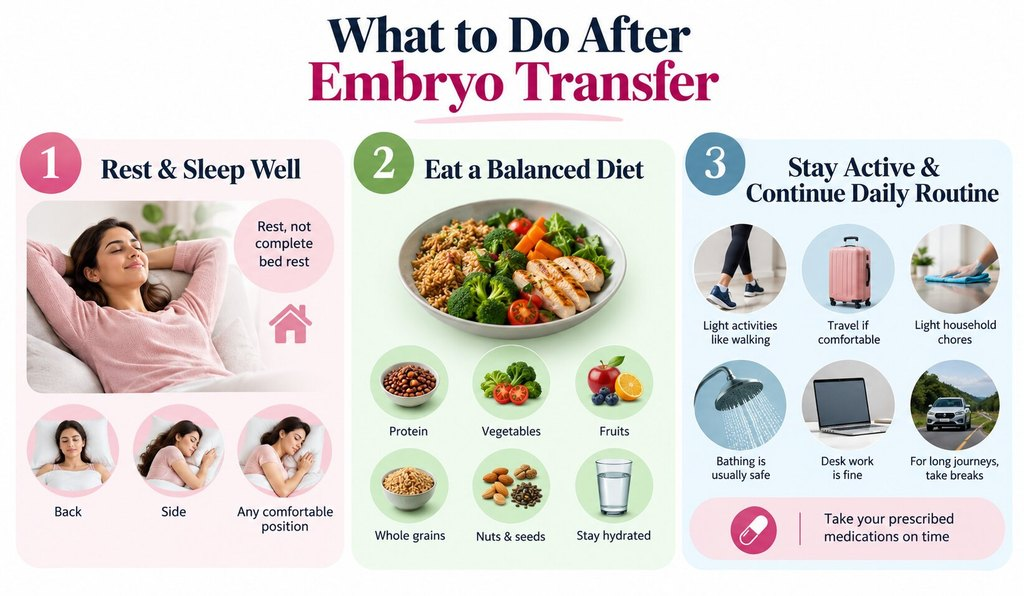
Here are some practical steps that you follow after embryo transfer precautions:
1. How to Rest and the Best Sleeping Position
Rest does not mean staying in bed all day. You can get up, walk around your home and change positions normally.
There is also no medically established sleeping position after embryo transfer that improves implantation. Sleep on your back, side or in whichever position allows you to rest well.
If your doctor has recommended extra rest because of your particular IVF cycle, follow that advice.
| What Does the Research Say? A 2017 ASRM review of 14 studies found no benefit from bed rest. One study of 240 patients reported live-birth rates of 56.7% with walking vs. 41.6% with bed rest. |
2. What to Eat: Diet Recommendations After Embryo Transfer
We see many women who can start a new diet and start to focus on certain foods. If you are one of them, it is important to know that this is not the time to experiment with restrictive diets or search for a particular “implantation food.”
If you are looking for an after embryo transfer diet chart, focus on fresh and home-cooked balanced meals that provide you with protein, fibre, vitamins and minerals. Add dal, eggs, paneer, vegetables, fruits, whole grains, nuts and seeds into your meals. Drink water regularly and continue folic acid or prenatal vitamins as advised.
If you are also learning about the factors that affect the uterine lining, you can read more about endometrial thickness and the ways it may be addressed during fertility treatment.
| What Does the Research Say? A 2022 review of 13 studies involving 3,638 people found that a healthy, plant-rich diet was linked with about 98% higher odds of live birth. |
3. Movement, Travel & Daily Activities You Can Continue
If you are wondering what to do after embryo transfer to increase your chances of success, following your medications and returning to comfortable daily activities are important steps. Depending on how you feel, you can often engage in walking, bathing, sitting at a desk or performing light household chores.
Many women ask, ” Can I travel after embryo transfer?”
Travelling may also be possible depending on your IVF cycle and how you feel. We advise our patients that if they go on long journeys, they should take regular breaks, stay hydrated, and take their medicines with them.
What to Avoid After Embryo Transfer
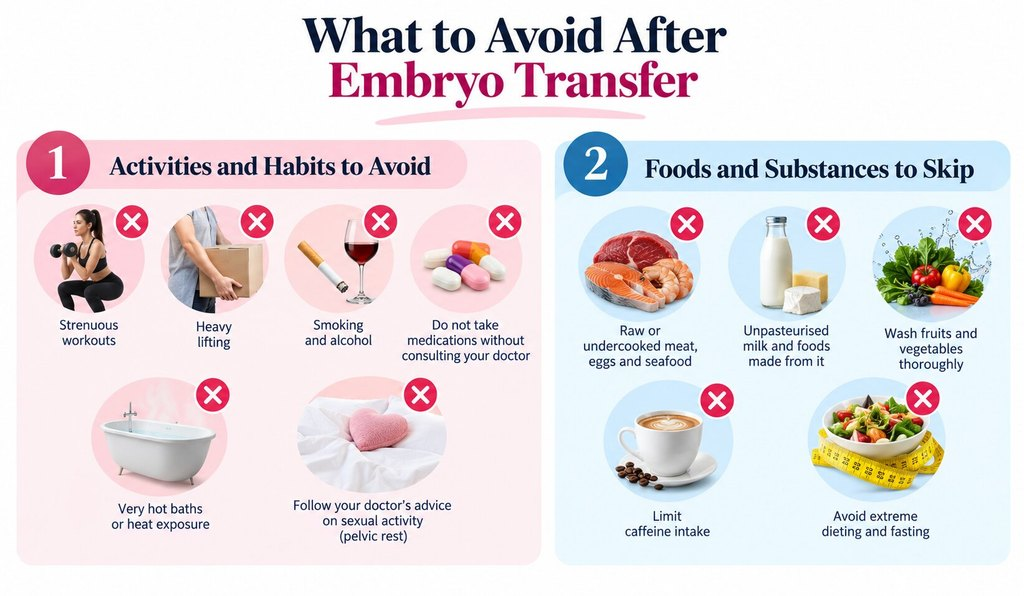
Here are a few simple precautions that can help you avoid extra strain and things that may be harmful.
1. Activities and Habits to Avoid
Here are some activities that you can avoid:
- Avoid strenuous workouts, heavy lifting and activities that can cause a fall or abdominal injury.
- Smoking and alcohol should be avoided.
- Do not take painkillers, herbal remedies, supplements or other medicines without checking with your fertility specialist first.
- We may also recommend avoiding very hot baths, or other situations that cause excessive heat exposure.
- If your doctor has advised pelvic rest, follow those instructions regarding sexual activity.
| What Does the Research Say? A 2026 study of 2,576 women found a 25.6% live-birth rate with moderate exercise, compared with 22.4% with more frequent exercise. |
2. Foods and Substances to Skip
The following are foods and substances that you may skip:
- Avoid raw or undercooked meat, eggs and seafood.
- Avoid unpasteurised milk and foods made from it.
- Wash fruits and vegetables thoroughly before eating.
- Keep caffeine intake within the limit recommended by your doctor.
- Extreme dieting and fasting are best avoided during this period.
| What Does the Research Say? A 2022 review of 26,922 IVF/ICSI patients found that higher alcohol intake was linked to a 7% lower pregnancy chance. |
Common Symptoms After Embryo Transfer
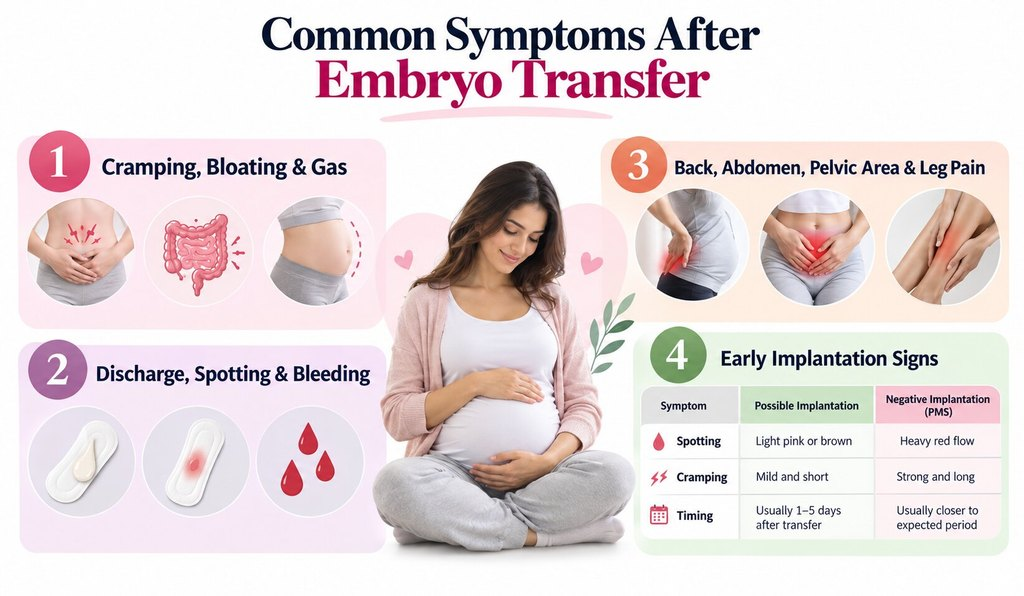
Here are some symptoms that you notice after the embryo transfer:
1. Cramping, Bloating & Gas: Is It Normal?
Cramping occurs after the embryo transfer procedure. In addition, progesterone could lead to constipation and a bloated sensation in some of the women.
2. Discharge, Spotting & Bleeding after Transfer
Some women notice vaginal discharge, occasional spotting and mild bleeding after the procedure. These are due to hormonal medications or vagina irritation due to transfer of the embryo.
3. Back, Abdomen, Pelvic Area and Leg Pain
With the process of ovarian stimulation and hormonal treatment done, some women may experience discomfort, which may be mild back pain, leg pain or pelvic pain.
4. Early Implantation Signs: Positive vs. Negative
After embryo transfer, some women experience symptoms that may make them wonder whether implantation has happened or their period is approaching.
The table below shows the common differences:
| Symptom | Possible Implantation | Negative Implantation (PMS) |
| Spotting | Light pink or brown | Heavy red flow |
| Cramping | Mild and short | Strong and long |
| Timing | Usually 1-5 days after embryo transfer | Usually closer to the expected period |
The Two-Week Wait & When to Test
The two weeks after the embryo transfer is very long. In our practice, we see that some women may not have any symptoms; that is completely normal. But this does not mean your embryo transfer has failed.
To confirm pregnancy, your fertility clinic may advise a beta hCG pregnancy test.
- For a Day-3 embryo transfer, pregnancy testing is usually done 12-14 days after transfer.
- For a Day-5 embryo transfer, it is usually done 9-12 days after transfer.
It is advisable not to take an early test that may give you false results. If the test comes back positive, your care shifts toward early pregnancy monitoring and antenatal check-ups.
When to Contact Your Doctor
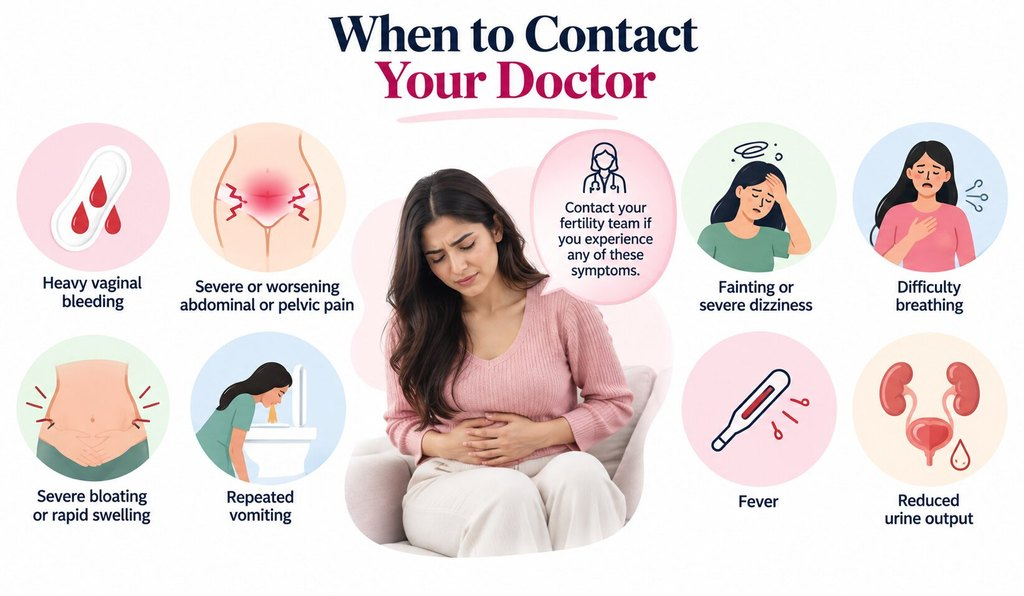
Contact your fertility team if you experience:
- Heavy vaginal bleeding
- Severe or worsening abdominal or pelvic pain
- Fainting or severe dizziness
- Difficulty breathing
- Severe bloating or rapid swelling
- Repeated vomiting
- Fever
- Reduced urine output
If you notice any of these, it’s best to book an appointment rather than wait it out at home.
Final Thoughts: Why Choose Kalyan Women’s Hospital & IVF Center for PMOS Infertility
Every IVF journey is different, and the days after transfer can bring many emotions. For people whose fertility concerns are related to PCOS or PMOS and infertility, the underlying condition may also need to be evaluated as part of fertility care.
At Kalyan Women’s Hospital & IVF Center in Palanpur, Dr Rahul Patel offers personalised fertility care for women with PMOS-related infertility. We focus on understanding each patient’s needs and providing appropriate treatment and support throughout the IVF journey, from preparation to embryo transfer and pregnancy testing.
FAQs
Most clinics ask you to lie down for about 20 to 30 minutes in the recovery room right after the procedure. Beyond that, strict bed rest isn’t needed — light movement the same day and a normal routine from the next day onward is usually fine, unless your doctor tells you otherwise.
Some mild cramping, light spotting or fatigue is common in the first day and usually comes from the procedure itself or the hormone medications, not a warning sign. Take it easy for the rest of the day, but you don’t need to stay in bed — walking around the house or using the washroom normally is fine.
Days 4 to 6 are usually when the embryo attaches to the uterine lining, and days 10 to 14 are when your clinic will schedule the beta-hCG blood test to confirm pregnancy. You may not feel anything during either window, and that’s completely normal.
Light spotting, mild cramping and unusual tiredness are commonly reported, but these overlap almost completely with normal PMS and medication side effects. Many people who go on to have a successful pregnancy notice no symptoms at all, so their presence or absence isn’t a reliable indicator either way.
Yes, it’s very common to feel hopeful, anxious and impatient within the same day. The two-week wait involves genuine uncertainty, and no particular feeling can tell you the outcome ahead of your test date, so staying occupied with your normal routine can help.
There’s no natural remedy proven to guarantee implantation, but the fundamentals do help: taking your medications exactly as prescribed, eating well, staying gently active, and keeping stress manageable. Beyond that, it largely comes down to biology outside anyone’s control, which is worth keeping in mind during the wait.