
“Why does my doctor not schedule embryo transfer when the embryo is ready?”
Many couples go through these concerns when they are just one step away from their IVF journey. So, why does this delay occur?
As we know, embryo quality is important in IVF. But before that, one main thing we look at is, “Is your uterus ready to receive an embryo?”
Because your embryo needs a healthy and thick endometrial lining for implantation to be successful. If your lining is thinner than expected, we may postpone embryo transfer until the ideal endometrial thickness for IVF transfer is achieved.
Understanding the complete IVF treatment process can help explain why preparing the uterine lining is an important step before embryo transfer. In this guide, we explain how to increase endometrial thickness for IVF success naturally and through medical treatments.
What Is Endometrial Thickness & Why It Matters for IVF
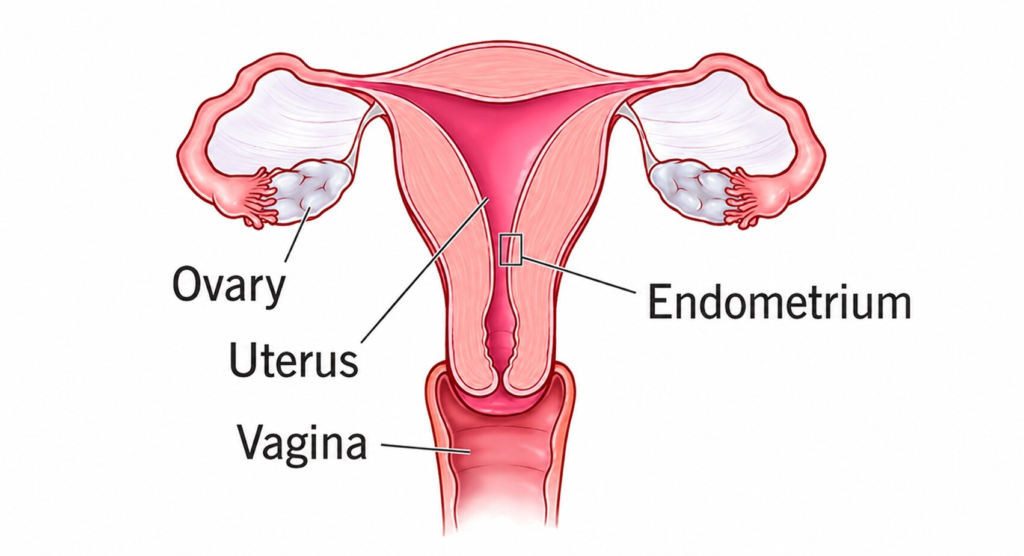
Inside your uterus, the soft innermost lining is called the endometrium, where your embryo attaches and grows during pregnancy.
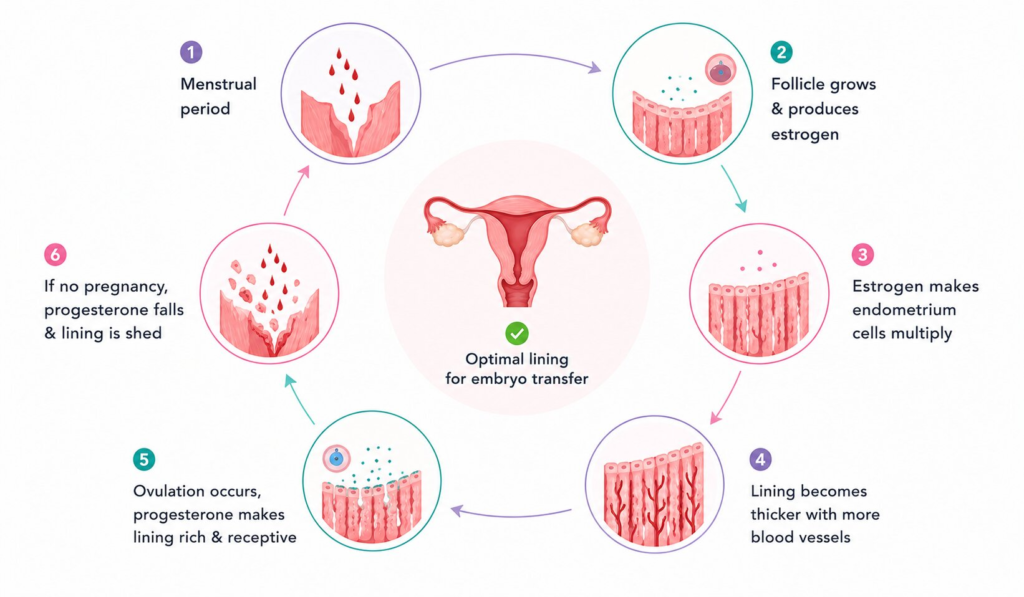
Every month, its thickness changes. Let’s see how it changes.
- During your menstrual period, your lining may thin as the old lining becomes shed.
- As you reach near to your ovulation days, your follicle grows and produces estrogen hormone.
- Estrogen signals cells of your endometrium to multiply.
- As more cells grow, blood vessels develop; your endometrium lining becomes thick.
- When ovulation occurs, progesterone hormone is secreted, which makes the lining rich in nutrients and receptive.
- If there is no pregnancy, the progesterone levels fall, and then the lining is shed in your next menstrual cycle.
That’s why the endometrial lining needs to be assessed before transferring the embryo to make sure that it is thickened and receptive.
Ideal Endometrial Thickness: IVF vs IUI vs FET
There is no single ideal endometrial thickness that guarantees pregnancy. As per experts, this can range between 7 mm and 14 mm. But in fertility treatment, we see that your endometrial thickness depends on what treatment you take.
The table below shows ideal endometrial thickness for IVF, IUI or FET before embryo transfer:
| Treatment | Ideal Thickness | When Is It checked? |
| IVF (Fresh Embryo Transfer) | 7–10 mm | We check it before the embryo is transfer, around the trigger injection |
| Frozen Embryo Transfer (FET) | 7–10 mm | Before progesterone is started or before the embryo transfer |
| IUI | Around 7 mm or more | Around the time of ovulation or on the trigger day |
Couples often wonder whether IVF or IUI is more suitable for their fertility condition, and endometrial thickness is only one of several factors considered.
So, many couples thought that ideal thickness gave them the best chance; that is not true. Before embryo transfer, we do not look only at your endometrial thickness but also at how healthy your endometrium is (endometrial patterns), its blood flow, hormone levels, embryo quality and your uterine health.
Natural Ways to Increase Endometrial Thickness
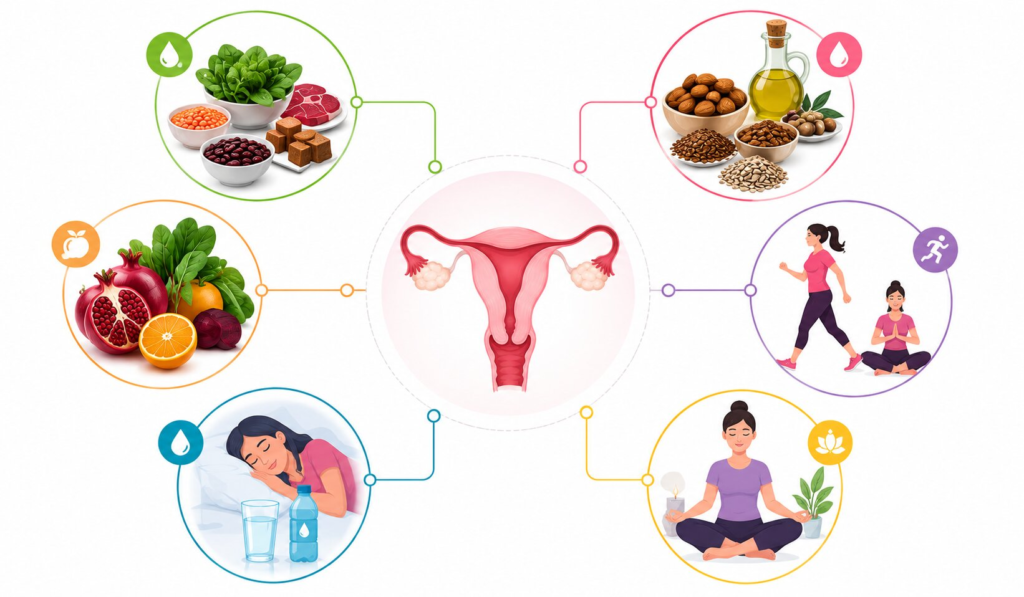
We always say to our patients that you cannot directly increase endometrial thickness. But with changes in your lifestyle and a balanced diet, you can improve the health of the endometrium.
Here are some foods to increase endometrial thickness and lifestyle tips that may support a healthier uterine lining:
Eat Iron-Rich Foods
Eat foods rich in iron such as spinach, lentils, lean meat, beans, and jaggery (in small amounts) as they help improve your blood circulation and supply your uterus with oxygen and other nutrients.
Include Healthy Fats and Vitamin E
Take foods such as almonds, sunflower seeds, walnuts, flaxseeds, and olive oil. These are sources og healthy fats and vitamin E, which are important for maintaining your reproductive and cellular health.
A study published in Fertility and Sterility found that vitamin E effectively increases endometrial thickness in 52% of women and uterine blood flow in 72% of women with a thin endometrial lining.
Eat Plenty of Fruits and Vegetables
Eat fruits and vegetables including beetroot, pomegranates, citrus fruits, and green leafy vegetables. Antioxidants and vitamins in these foods help keep your body healthy throughout your fertility process.
Stay Physically Active
Walking for 30 minutes along with light exercises and basic yoga could be helpful in improving blood circulation in your uterus. A 2025 study published in BMC Women’s Health revealed that women who performed 12 weeks of low-intensity exercise had a thicker uterine lining (6.67 mm) compared to those who were not into exercise (5.88 mm).
Get Enough Sleep and Stay Hydrated
Get 7-9 hours of sleep every night and also drink enough 2-3 litres of water every day. These basic practices contribute to good health and normal hormonal function in your body.
Take Care of Your Emotional Health
Trying to conceive can be emotionally challenging. Take time to practise deep breathing, meditation, or other relaxing activities that help you feel calm and reduce stress.
Women with hormonal conditions such as PCOS/PMOS may also require additional treatment to improve ovulation and prepare for pregnancy.
Medical & Clinical Treatments to Increase Endometrial Thickness
If you have a thin endometrial lining due to hormonal or some other medical problem, changing your lifestyle may not be enough.
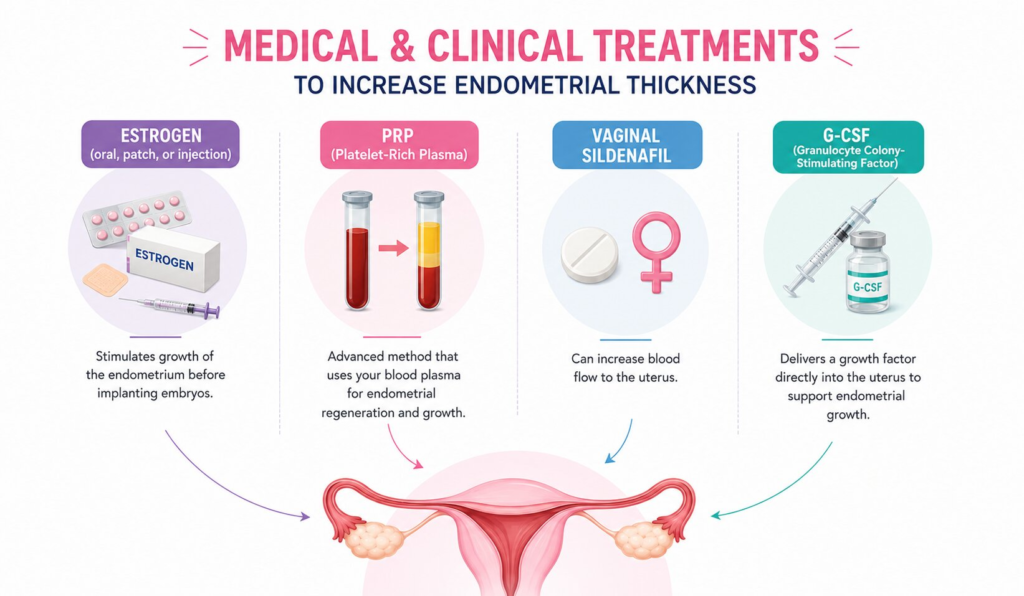
Depending on your health status, we suggest the following medical interventions to thicken the endometrial lining and help your uterus prepare for implantation. The treatment plan depends on your fertility evaluation and the underlying cause of a thin endometrial lining.
| Treatment | How It Helps |
| Estrogen (oral, patch, or injection) | Stimulates growth of the endometrium before implanting embryos. |
| PRP (Platelet-Rich Plasma) | Advanced method that uses your blood plasma for endometrial regeneration and growth |
| Vaginal sildenafil | Can increase blood flow to the uterus |
| G-CSF (Granulocyte Colony-Stimulating Factor) | Delivers a growth factor directly into the uterus to support endometrial growth |
When Hysteroscopy Surgery May Be Needed
If your endometrial lining doesn’t respond well to medical treatment, we may decide to perform a hysteroscopy to find out what is causing the problem.
It is a minor surgical procedure that helps us examine the inside of your womb with the help of a small camera to see whether you have Asherman’s syndrome (uterine scarring), uterine adhesions, polyps or some other problems with your endometrium.
Correcting these conditions can help your endometrium respond better to hormone treatment and improve the chances of successful embryo implantation.
When to Consult a Fertility Specialist
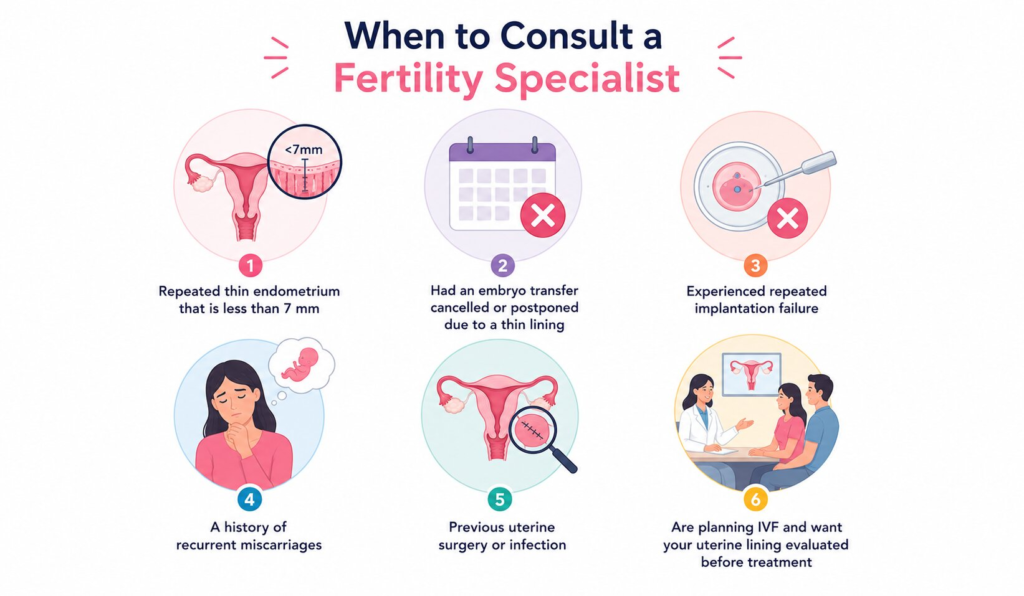
Consult a fertility specialist if you have:
- Repeated thin endometrium that is less than 7 mm
- Had an embryo transfer cancelled or postponed due to a thin lining
- Experienced repeated implantation failure
- A history of recurrent miscarriages
- Previous uterine surgery or infection
- Are planning IVF and want your uterine lining evaluated before treatment
Final Thoughts: Thin Endometrium? We’re Here to Help

A thin endometrial lining can be challenging. We understand this time can be emotionally frustrating, but this extra time gives your embryo a supportive environment inside your uterus to implant successfully. Early diagnosis and timely care can make a meaningful difference.
Consult Dr Rahul Patel at Kalyan Women’s Hospital & IVF center, Palanpur, for personalised treatment, advanced diagnostics including ultrasound and hysteroscopy, and patient-friendly care focused on improving endometrial receptivity.
FAQs
Most fertility specialists consider an endometrial thickness of 7–10 mm suitable for embryo transfer, although a healthy trilaminar (three-layer) appearance and good blood flow are equally important. Pregnancy is still possible outside this range depending on individual circumstances.
Yes. A thin endometrial lining may reduce the chances of embryo implantation because the uterus may not provide the ideal environment for the embryo to attach and grow. However, many women with a thin lining still achieve pregnancy after appropriate treatment.
Vitamin E has been studied for its potential role in improving uterine blood flow and endometrial thickness in some women with a thin lining. Your fertility specialist may recommend supplements only if they are appropriate for your condition.
Yes. Many fertility specialists consider 7 mm an acceptable minimum thickness for embryo transfer, particularly if the lining has a healthy trilaminar appearance and good blood supply. Pregnancy depends on several factors beyond endometrial thickness alone.
A thin endometrial lining may occur due to low estrogen levels, reduced uterine blood flow, previous uterine surgery, uterine infections, scarring (Asherman’s syndrome), hormonal disorders, or certain medications. Identifying the underlying cause is essential for selecting the right treatment.
No. Treatment depends on the underlying cause of the thin lining. Some women conceive naturally or with ovulation induction or IUI after appropriate treatment. IVF is generally considered when other fertility treatments are unsuccessful, or additional infertility factors are present.

One Response